The Spread

1The Cost You Pay First
A quick restatement, because everything else builds on it.
You buy at the ask, which is the higher of the two prices. Your position is immediately valued at the bid, which is the lower one. So the trade opens down by the full spread, before the market has done anything at all.
Nothing about that is a penalty or a punishment. It is simply what having two prices means. But it produces a rule worth stating plainly.
The market must move by the full spread before you break even.
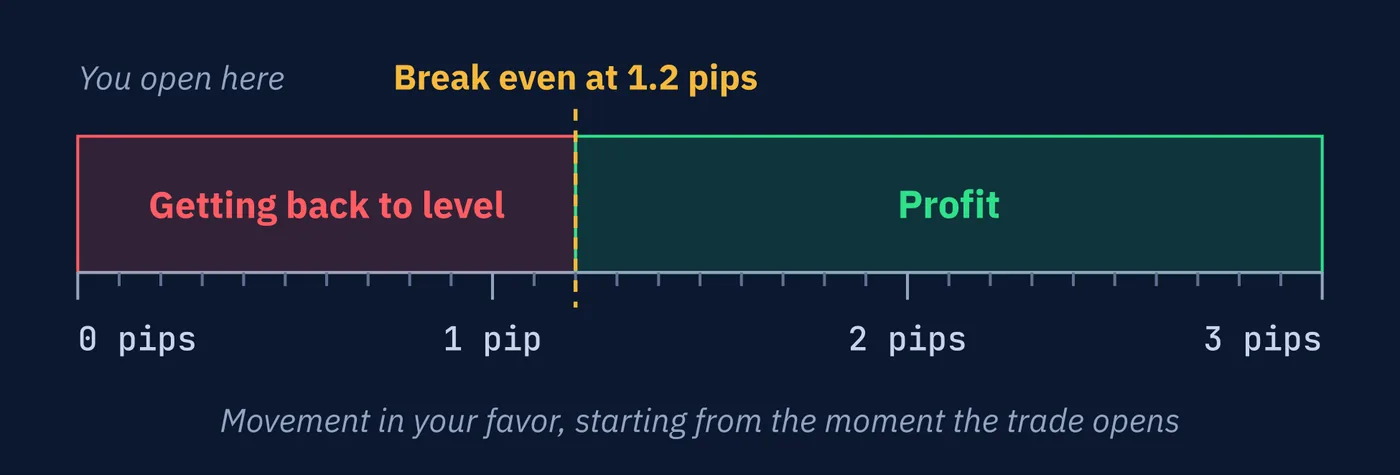
On a pair with a 1.2 pip spread, the first 1.2 pips of movement in your favor are not profit. They are you getting back to level. Profit starts at pip 1.3.
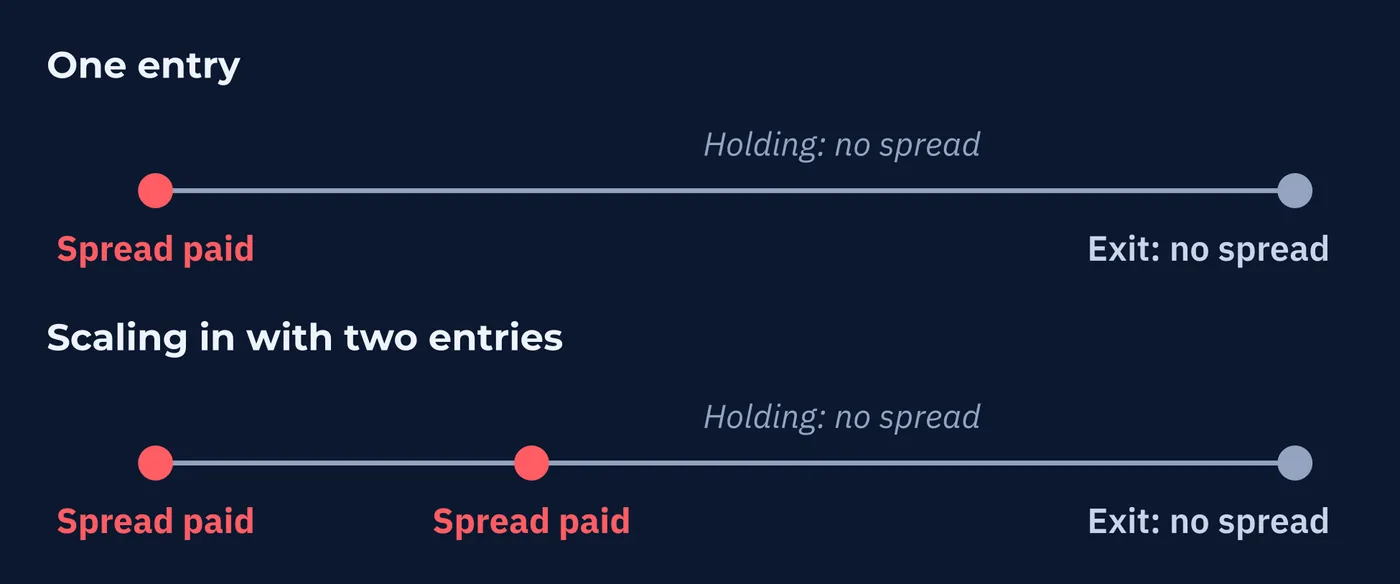
And the spread is charged once, at entry. Not daily, not at exit. If you scale into a position in two separate entries, you pay it twice, because you opened two positions.
2Why Your Trade Opens Below the Line
This is the part that confuses people the first time they see it, and it has a clean explanation.
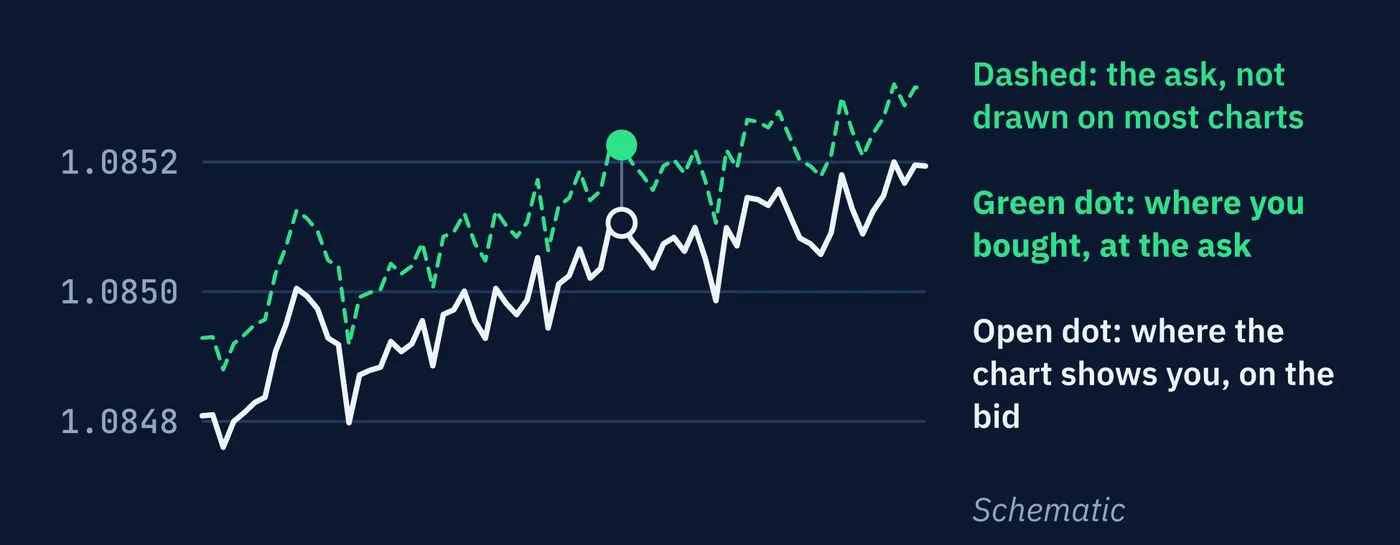
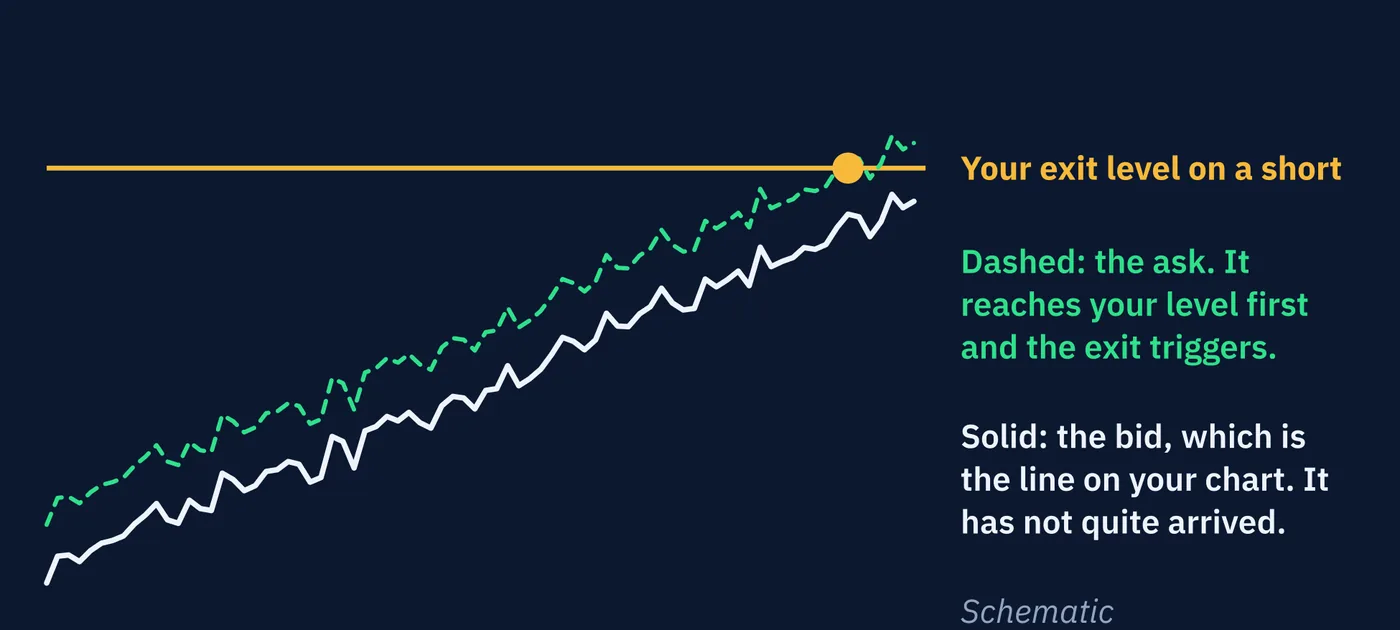
The price line on your chart is the bid. Almost every platform draws it that way.
So when you buy, you pay the ask, but the chart is showing the bid. The position appears to open slightly below where you entered, and it looks as though the market immediately went against you.
It did not. You are simply looking at the other price.
3The Viability Test
Here is the most useful thing in this lesson, and it takes about ten seconds to run.
A spread on its own tells you very little. What matters is the spread compared to the move you are trying to catch.
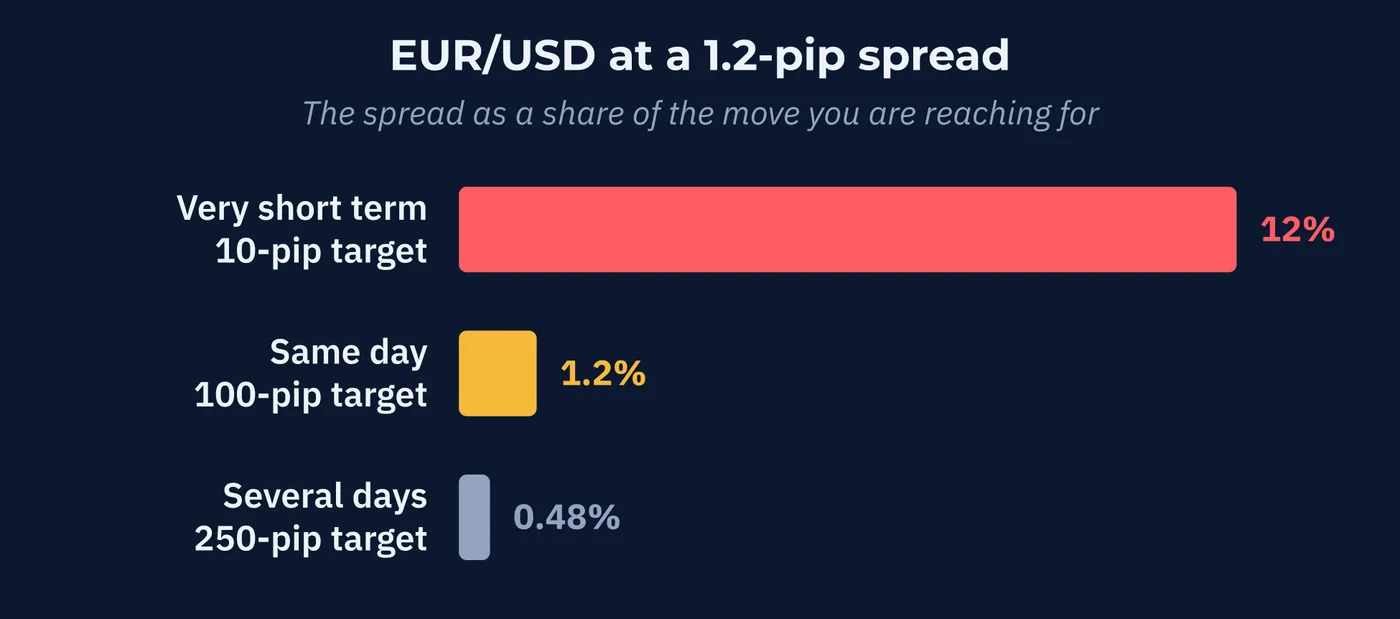
spread in pips ÷ target in pips = cost as a share of the moveRun it on EUR/USD at a 1.2 pip spread, across three different kinds of trade.
| Style of Trade | Target | Spread | Cost as Share of Move |
|---|---|---|---|
| Very short term | 10 pips | 1.2 pips | 12% |
| Same day | 100 pips | 1.2 pips | 1.2% |
| Several days | 250 pips | 1.2 pips | 0.48% |
Same pair. Same spread. The cost of trading it ranges from trivial to significant, and the only thing that changed was how far you were trying to go.
Now the same test on an exotic pair with a 30 pip spread.
| Style of Trade | Target | Spread | Cost as Share of Move |
|---|---|---|---|
| Very short term | 10 pips | 30 pips | 300% |
| Same day | 100 pips | 30 pips | 30% |
| Several days | 250 pips | 30 pips | 12% |
Look at the first row. A trade targeting ten pips on a pair with a thirty pip spread needs the market to move three times the distance you are aiming for, just to get back to level.
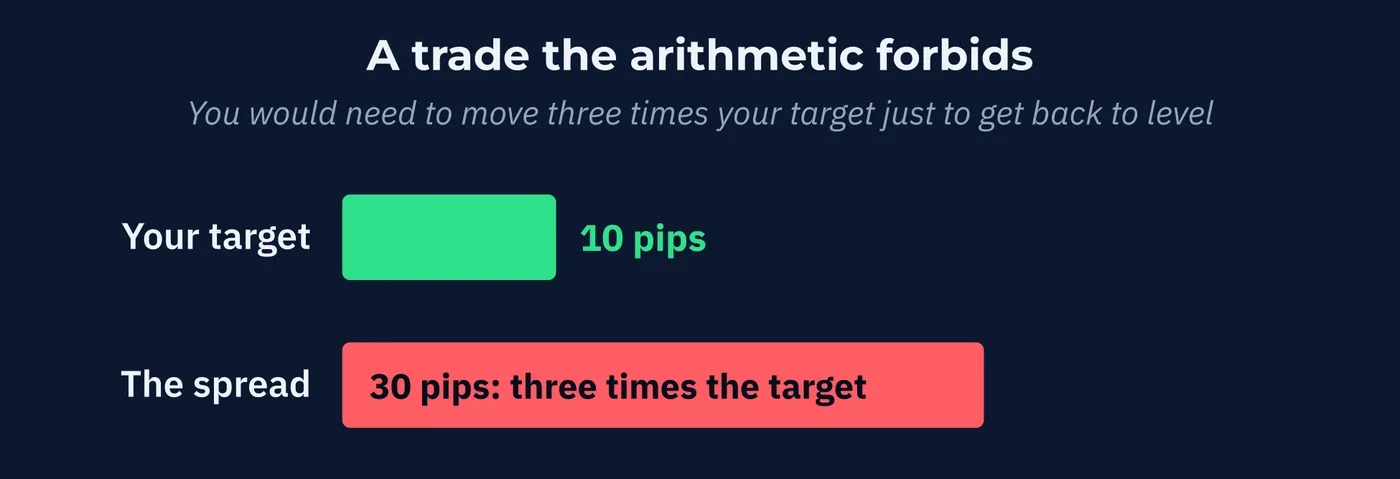
That trade cannot work. Not because your analysis is bad, but because the arithmetic forbids it. And you could know that before opening the chart.
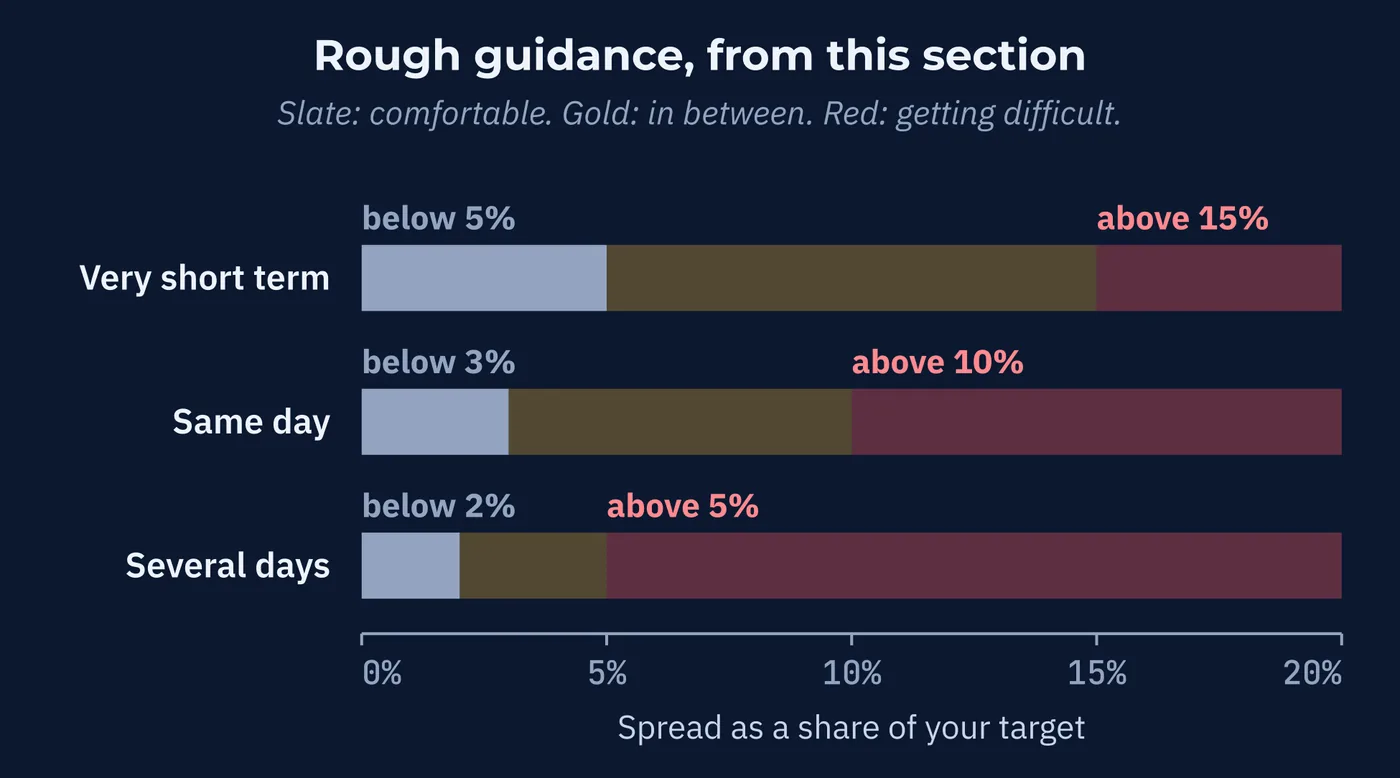
Rough guidance on what the number should look like, by style:
| Style | Comfortable | Getting Difficult |
|---|---|---|
| Very short term | Below 5% | Above 15% |
| Same day | Below 3% | Above 10% |
| Several days | Below 2% | Above 5% |
Notice what these say. Shorter trades tolerate proportionally more cost, because they are aiming at smaller moves and there is nowhere else for the cost to go. Longer trades should be paying very little, because the target is large enough to swallow it easily.
4Spreads Are Not Fixed
The spread you read in an advertisement and the spread you actually pay are often different numbers.
Most retail accounts use a variable spread, which moves with conditions. It tightens when the market is busy and widens when it is not.
Some accounts offer a fixed spread, which stays the same regardless of conditions. It is usually set wider than the variable minimum, so you pay for the predictability.
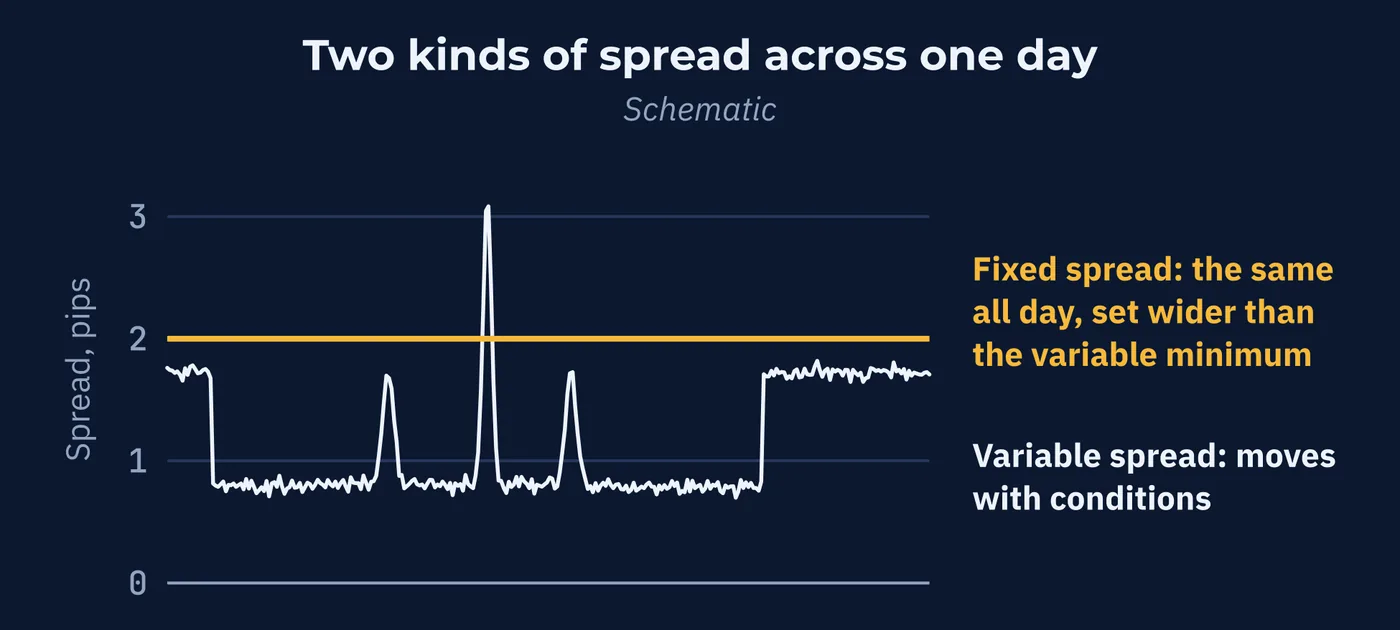
Three situations reliably widen a variable spread, and all three are worth recognizing.
| When | Why | What It Means for You |
|---|---|---|
| Around major news | Firms pull back their quotes when nobody knows what is about to happen | Entry is temporarily much more expensive |
| Quiet overnight hours | Few participants are active, so fewer people are quoting | The same trade costs more than it would in a busy session |
| At session changeovers | Liquidity is shifting from one region to another | Brief periods of elevated cost |
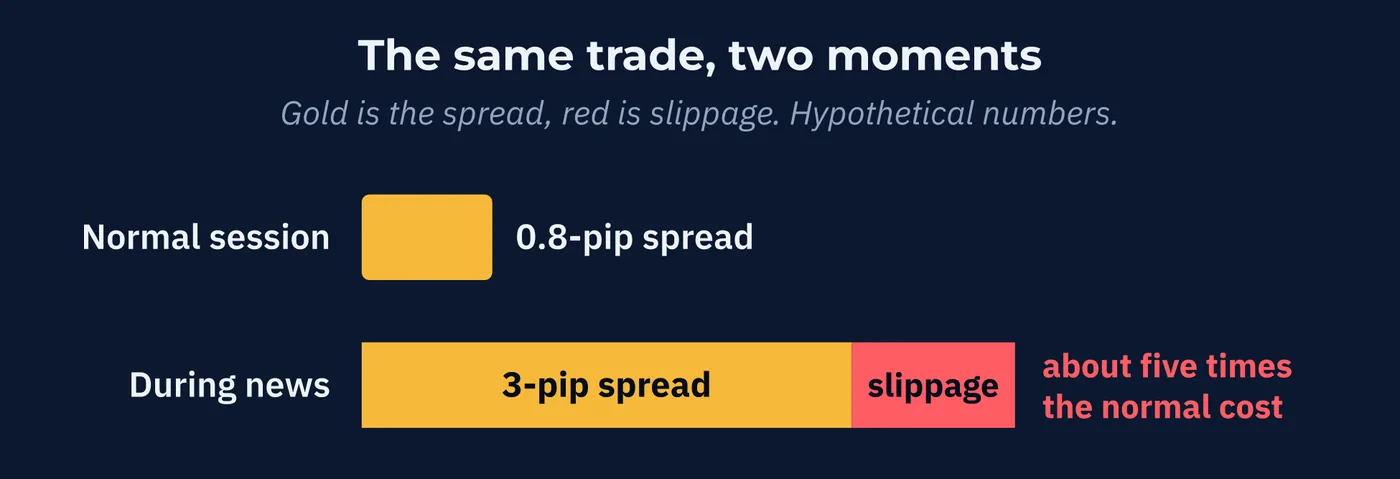
The practical difference is real. A trade entered at a three pip spread instead of a 0.8 pip spread has started roughly four times further behind, on identical analysis.
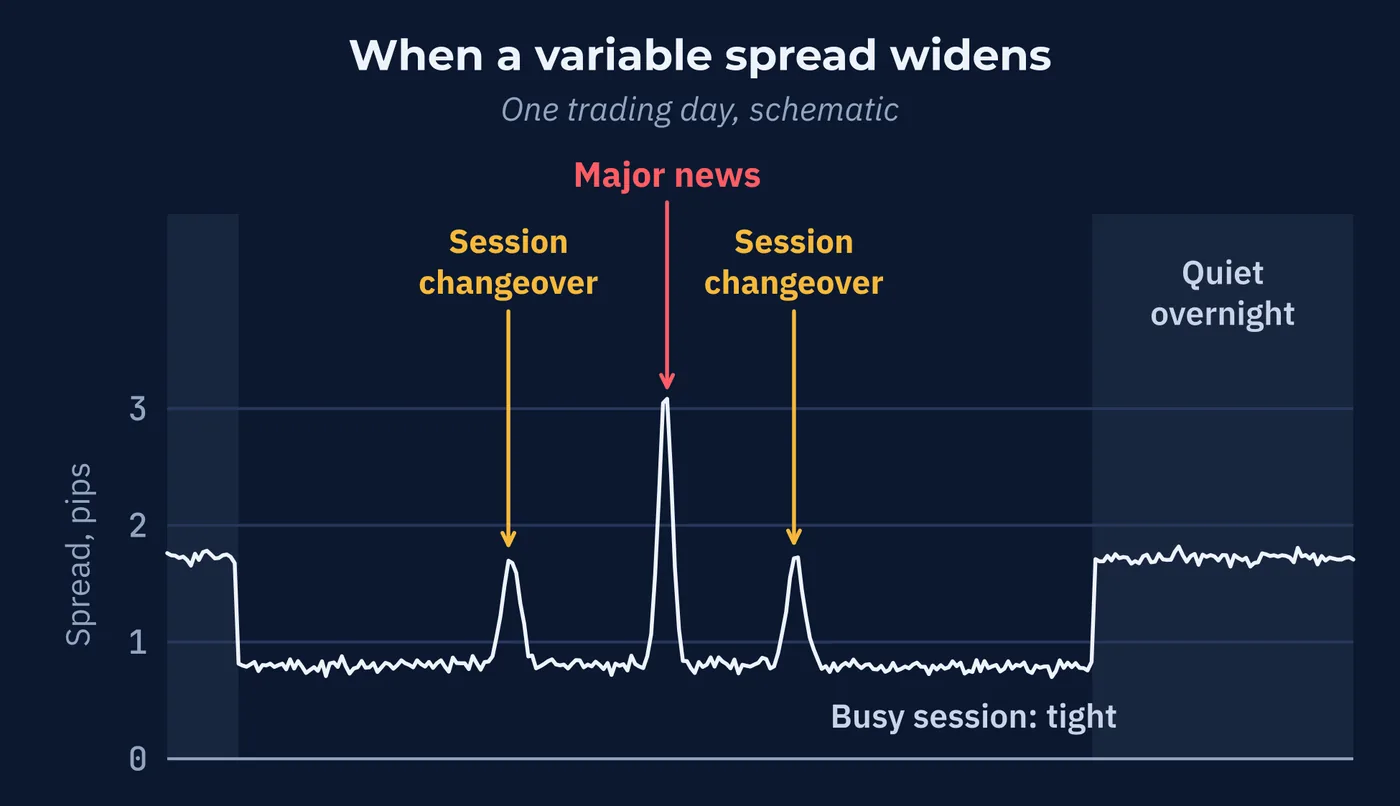
So the discipline is short: check the live spread before entering, not the advertised one. It takes a second and it is visible on every platform.
5Slippage: The Unpredictable Cost
The spread is the cost you can see in advance. There is a second one you cannot.
Slippage is the difference between the price on screen when you click and the price your order actually fills at. When it goes against you on a buy, you pay more than the ask you saw, and the trade starts further behind than the spread alone would explain.
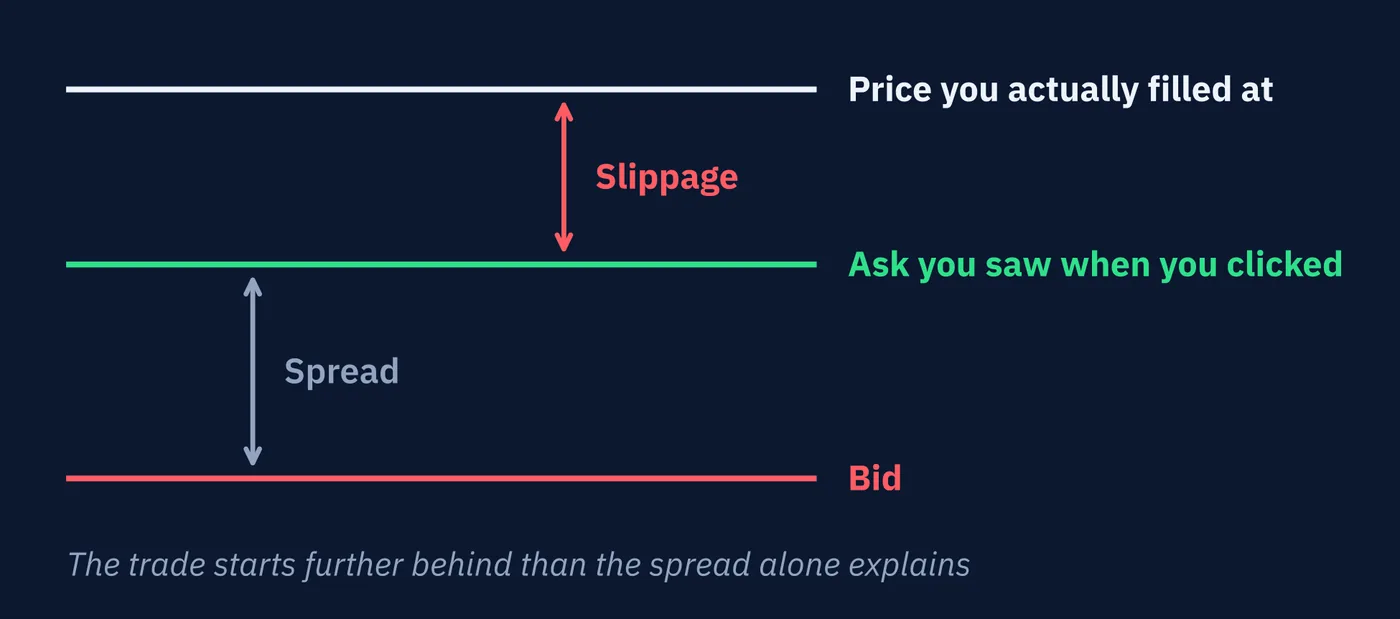
Most of the time this is not worth worrying about. On a major pair in a busy session at a modest size, orders fill at or extremely close to the quoted price.
It becomes material in three situations.
Around major news, because prices move faster than quotes can update. By the time your order arrives, the market has already repriced.
On exotic and thinly traded pairs, where there may not be enough available at the quoted price to fill your whole order.
And when you use a market order in a fast-moving market because you feel you must get in now.
6Two Ways Brokers Charge You
Every spread you pay goes to somebody. Knowing how a broker earns determines whether their advertised number is the whole story.
In a spread-based model, the broker widens the spread above what it pays and keeps the difference. No separate charge appears anywhere. The spread is the entire cost.
In a commission-based model, the broker passes on a much tighter spread and charges a separate fee per trade instead. The advertised spread is genuinely narrow, and it is not the whole cost.
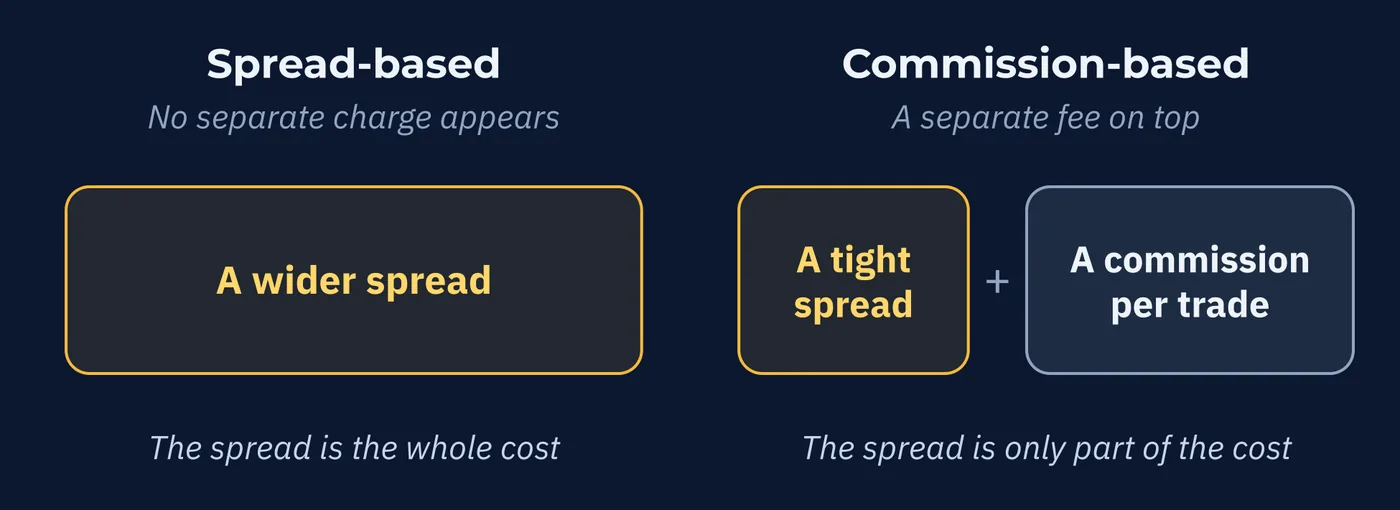
Which raises an obvious question: which is cheaper? The answer is that you have to work it out, and the advertised numbers can point the wrong way.
Three brokers, same pair, same trade size. A commission converts into a pip equivalent, and on a standard position a seven dollar commission works out to about 0.7 pips. Lesson 16 shows exactly why.
| Broker | Advertised Spread | Commission | True Cost |
|---|---|---|---|
| Broker A | 1.5 pips | None | 1.5 pips |
| Broker B | 0.3 pips | About 0.7 pips | 1.0 pips |
| Broker C | 0.8 pips | None | 0.8 pips |
Broker B advertises a spread nearly three times tighter than Broker C. Broker C is cheaper.
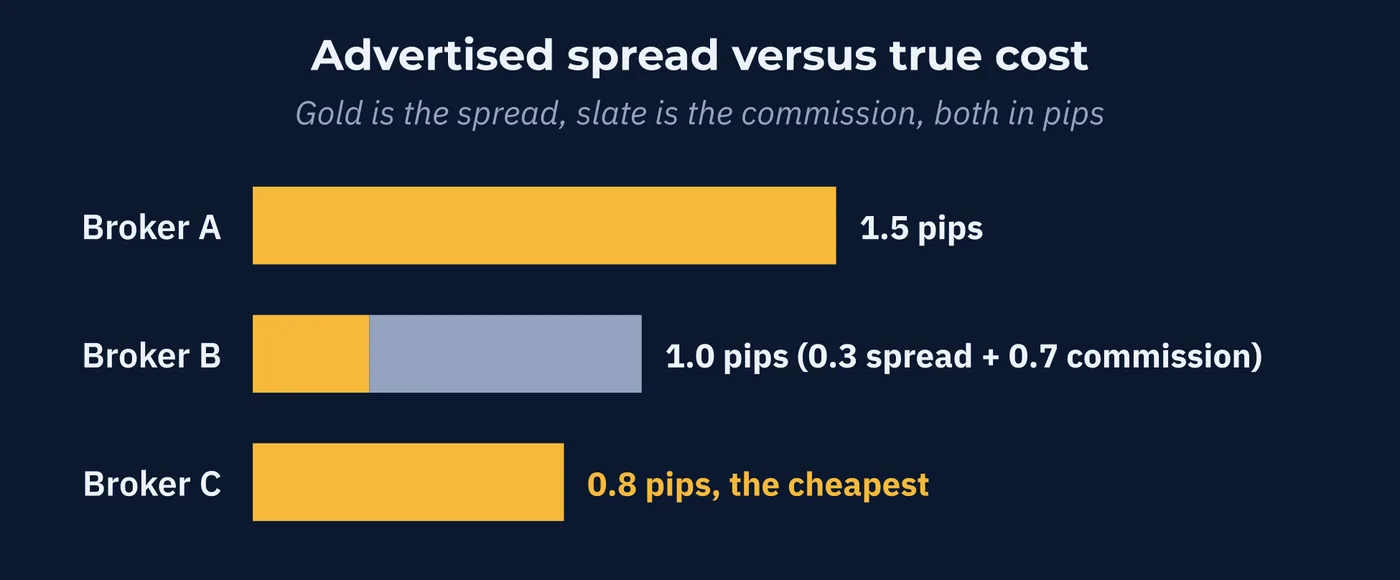
This is not a trick anyone is playing. Both models are legitimate, and which one wins depends on the pair, the size, and how often you trade. The point is that the advertised spread answers only part of the question, and the full answer is a minute of arithmetic in the broker's own contract terms.
7Crypto Costs Come in Layers
Crypto charges the same underlying thing in a different shape. There is no pip, so everything is a percentage of the position, and there is usually more than one charge.
On a centralized exchange, two layers apply. There is the spread in the order book, and there is the exchange's own fee, which is generally lower for orders that wait in the book than for orders that fill immediately.
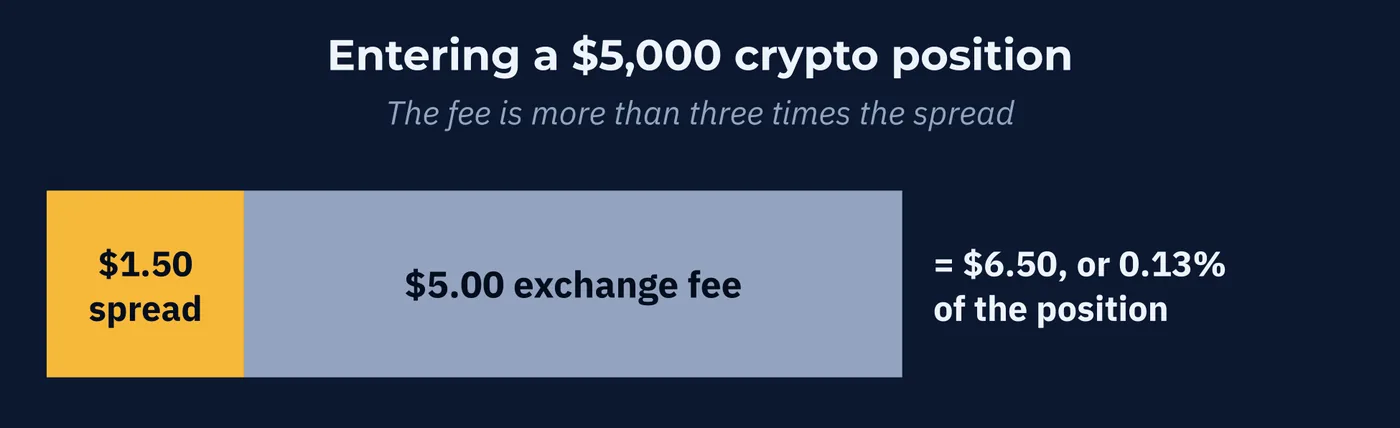
On a five thousand dollar position with a small spread and a typical fee:
spread $1.50 + exchange fee $5.00 = $6.50$6.50 ÷ $5,000 = 0.13% to enterThe fee is more than three times the spread. Someone comparing exchanges on spread alone would be looking at the smaller number.
Trading directly on a blockchain rather than through an exchange adds a third layer: a network fee for processing the transaction. That one behaves differently from everything else in this lesson, because it does not scale with your position.
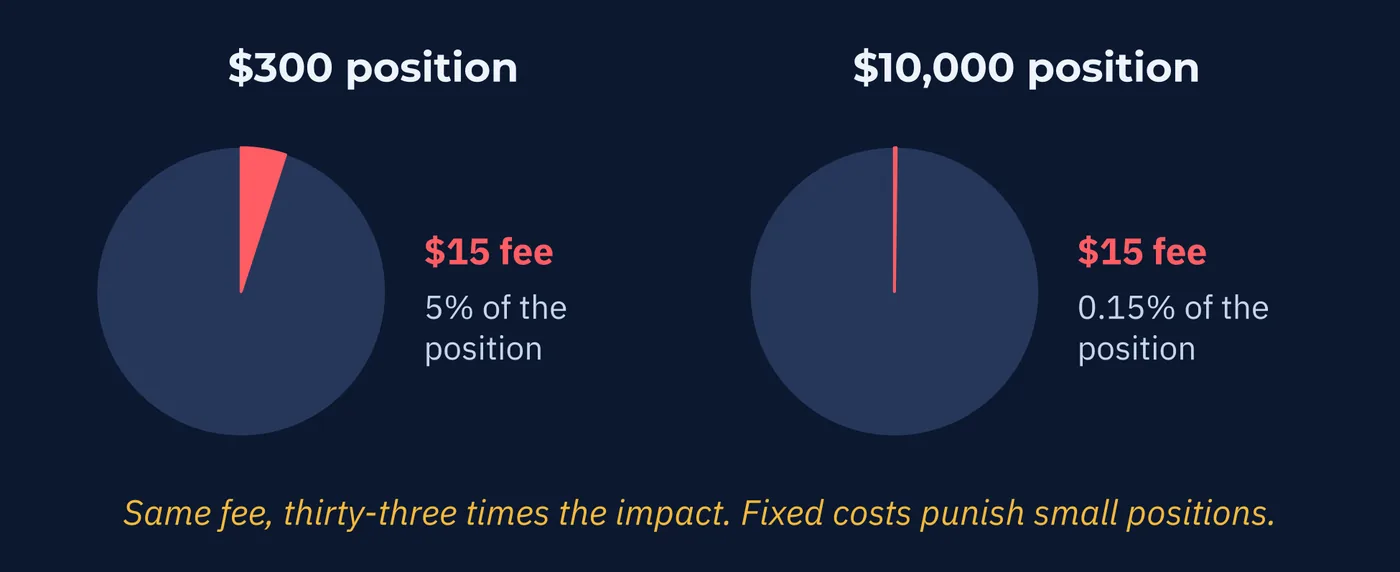
| Position Size | Network Fee | Cost as Share of Position |
|---|---|---|
| $300 | $15 | 5% |
| $10,000 | $15 | 0.15% |
Same fee. Thirty-three times the impact, purely because the position was smaller. Fixed costs punish small positions, which is a general truth worth carrying well beyond crypto.
8The Check Before You Click
Everything above reduces to a short routine that runs in under a minute.
| Ask | Why |
|---|---|
| What is the live spread right now? | Not the advertised one. Conditions change it. |
| What move am I actually targeting? | The cost only means something against this. |
| What is the cost as a share of that move? | This is the number that says yes or no. |
| Are conditions unusual right now? | News and thin hours widen spreads and add slippage. |
| Does my broker charge commission too? | If so, the spread is not the full cost. |
None of this tells you whether a trade will work. Plenty of trades pass every one of these checks and still lose, because cost and outcome are different things.
What it does is stop you taking trades that could not have worked. That is a smaller claim than most trading advice makes, and it is one of the few that holds up.
Three Things to Remember
Try This
Fifteen minutes. Run the viability test on trades you might actually take.
Words From This Lesson
| Term | What It Means |
|---|---|
| Variable spread | A spread that changes with conditions, tightening when the market is busy and widening when it is thin. |
| Fixed spread | A spread that stays constant regardless of conditions, usually set wider than the variable minimum. |
| Slippage | The gap between the price you saw when you clicked and the price your order actually filled at. |
| Spread-based broker | A broker whose entire charge is built into the spread, with no separate fee. |
| Commission-based broker | A broker offering a tighter spread and charging a separate fee per trade. |
| Viability test | Spread divided by target move. The share of your intended move that cost consumes. |
Test Your Knowledge
Eight questions. Answer them all before checking the key on the following pages. If a question gives you trouble, the answer key tells you which section to revisit.
- A. 0.6 pips
- B. 1.2 pips
- C. 2.4 pips
- D. It depends on your position size
- A. The chart displays the bid, and you bought at the ask
- B. The broker takes a fee immediately
- C. The market always moves against new positions
- D. There is a delay before positions update
- A. 12%
- B. 0.12%
- C. 1.2%
- D. 120%
- A. The spread will shrink once you enter
- B. The trade is expensive but workable
- C. Cost is irrelevant on short trades
- D. The trade needs a 300% move just to break even, so it cannot work
- A. During the busiest hours of the day
- B. Only on exotic pairs
- C. At the same time every day
- D. Around major news and during thin overnight hours
- A. A fee charged for holding a position overnight
- B. The difference between bid and ask
- C. The gap between the price you clicked and the price you filled at
- D. A charge applied when closing early
- A. Broker B, since its spread is far tighter
- B. Broker C, at 0.8 pips against Broker B's 1.0
- C. They cost the same
- D. It cannot be determined
- A. Fixed costs are proportionally far heavier on small positions
- B. Larger positions are always safer
- C. Network fees scale with position size
- D. Small positions are charged at a higher rate
Answer Key
Each answer explains why the correct choice is correct, why the others are not, and where to reread.
Question 1 · correct answer B
You paid the ask and are valued at the bid, so you begin down the full spread. The market must recover all 1.2 pips before you are level.
A halves the spread, but you pay it in full rather than half at each end. C doubles it, treating it as though it were charged again at exit, which it is not. D confuses the pip distance with what those pips are worth, and the breakeven distance is the same at any size.
Review: Section 1, The Cost You Pay First
Question 2 · correct answer A
Platforms draw the bid line. You bought at the ask, which is higher, so the position appears to start below your entry even though nothing has moved.
B describes a commission, which is separate and does not apply at every broker. C attributes intent to a market that does not know you exist. D suggests a technical delay, when the gap is structural and permanent.
Review: Section 2, Why Your Trade Opens Below the Line
Question 3 · correct answer C
1.2 divided by 100 is 0.012, or 1.2 percent. Cost is a small fraction of a move that size.
A is the answer for a 10 pip target, which shows how much the target matters. B is off by a factor of ten. D inverts the division entirely.
Review: Section 3, The Viability Test
Question 4 · correct answer D
Thirty divided by ten is three, or 300 percent. The market must travel three times your target before you are level, so the trade is impossible on arithmetic alone.
B badly understates it, since 300 percent is not a matter of degree. C reverses the truth, as cost matters most on short trades. A is wrong because the spread you pay is the spread at entry.
Review: Section 3, The Viability Test
Question 5 · correct answer D
Spreads widen when the firms quoting prices pull back, which happens around news and during thin hours when few participants are active.
A is backward, since busy conditions produce the tightest spreads. C suggests a schedule, when the cause is liquidity and information rather than the clock alone. B is wrong because variable spreads on majors widen too.
Review: Section 4, Spreads Are Not Fixed
Question 6 · correct answer C
Slippage is the difference between the price displayed when you click and the price your order actually executes at, and it grows in fast or thin conditions.
A describes a swap or overnight financing charge. B describes the spread, which is predictable and visible in advance. D describes an early closure fee that is not standard.
Review: Section 5, Slippage
Question 7 · correct answer B
Broker B's true cost is 0.3 plus about 0.7, which is 1.0 pips. Broker C charges 0.8 pips in total, so C is cheaper despite advertising a wider spread.
A compares advertised spreads and ignores the commission, which is exactly the error this section exists to prevent. C is wrong because the totals differ by 0.2 pips. D is wrong because both figures are published and the comparison takes seconds.
Review: Section 6, Two Ways Brokers Charge You
Question 8 · correct answer A
The same fifteen dollars is five percent of a three hundred dollar position and 0.15 percent of a ten thousand dollar one. A fixed cost bites hardest when the position is small.
B draws a conclusion about safety that does not follow, since larger positions carry larger risk. C is wrong because the fee is the same in both cases, which is the whole point. D reverses cause and effect, as the rate is identical and only the proportion differs.
Review: Section 7, Crypto Costs Come in Layers
Keep going
The Real Cost & Mechanics of a Trade is written by Kanin D. Alldredge for The Currency Classroom, and it is free to read. There is more free from CNS: start here.
Start free with CNS →