When a Peg Breaks

1Five Ways to Break
Pegs do not fail randomly, and they rarely fail without warning. They fail through identifiable mechanisms. The indicators for each are usually visible in public data beforehand.
There are five. Most real collapses involve more than one.
| Mechanism | What Happens |
|---|---|
| Reserve depletion | The money to defend the rate runs out |
| Fundamental misalignment | The declared rate drifts far from economic reality, usually through inflation |
| Speculative attack | Participants bet against the rate at a scale the defense cannot absorb |
| Voluntary abandonment | The institution chooses to stop, before being forced to |
| Credibility withdrawal | Belief in the commitment disappears, and with it the commitment |
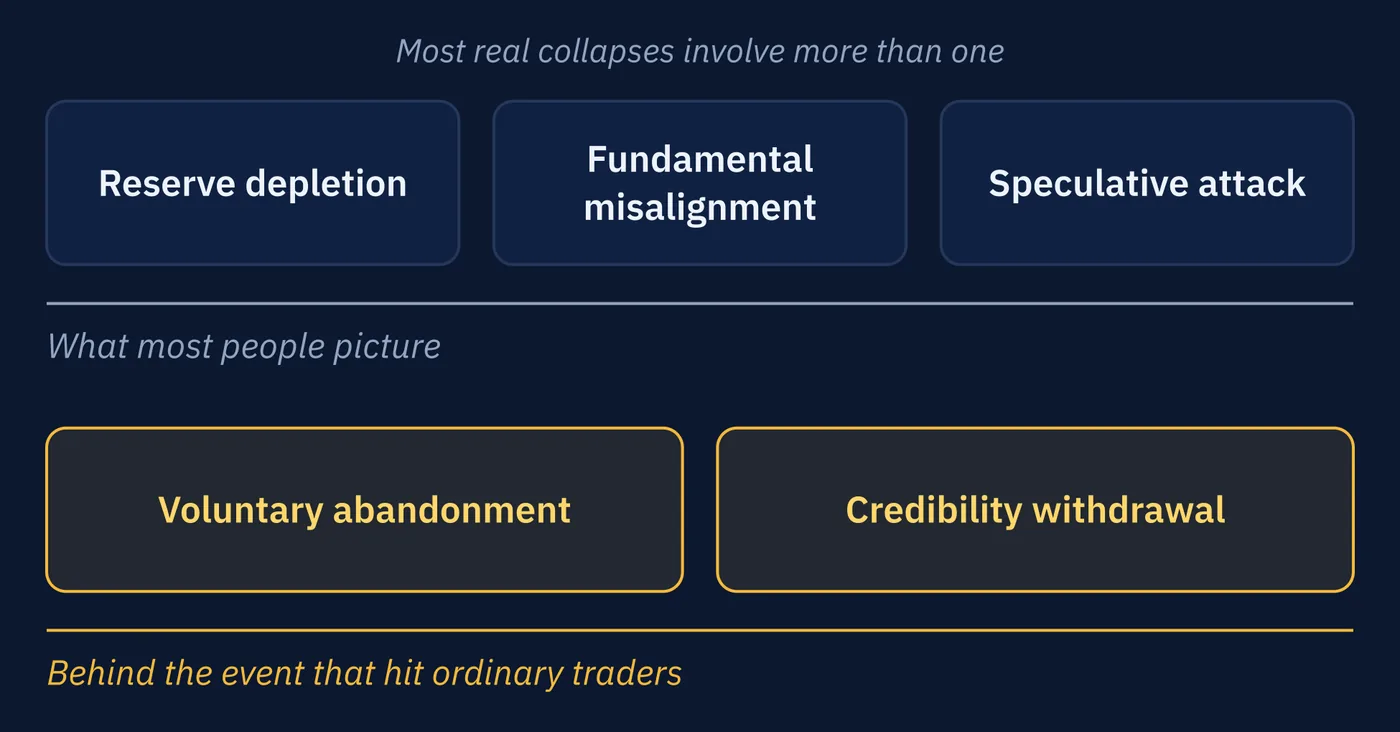
The first three are what most people picture. The last two are more interesting. Between them they explain the event that mattered most to ordinary traders.
2Reserve Depletion Feeds Itself
The most straightforward mechanism, and the one with the nastiest shape.
A central bank defending an overvalued currency spends reserves buying its own currency. Reserves are finite. Every day of defense costs some of them.
The problem is what happens as the market watches the balance fall.
reserves fall → confidence falls → selling rises → reserves fall faster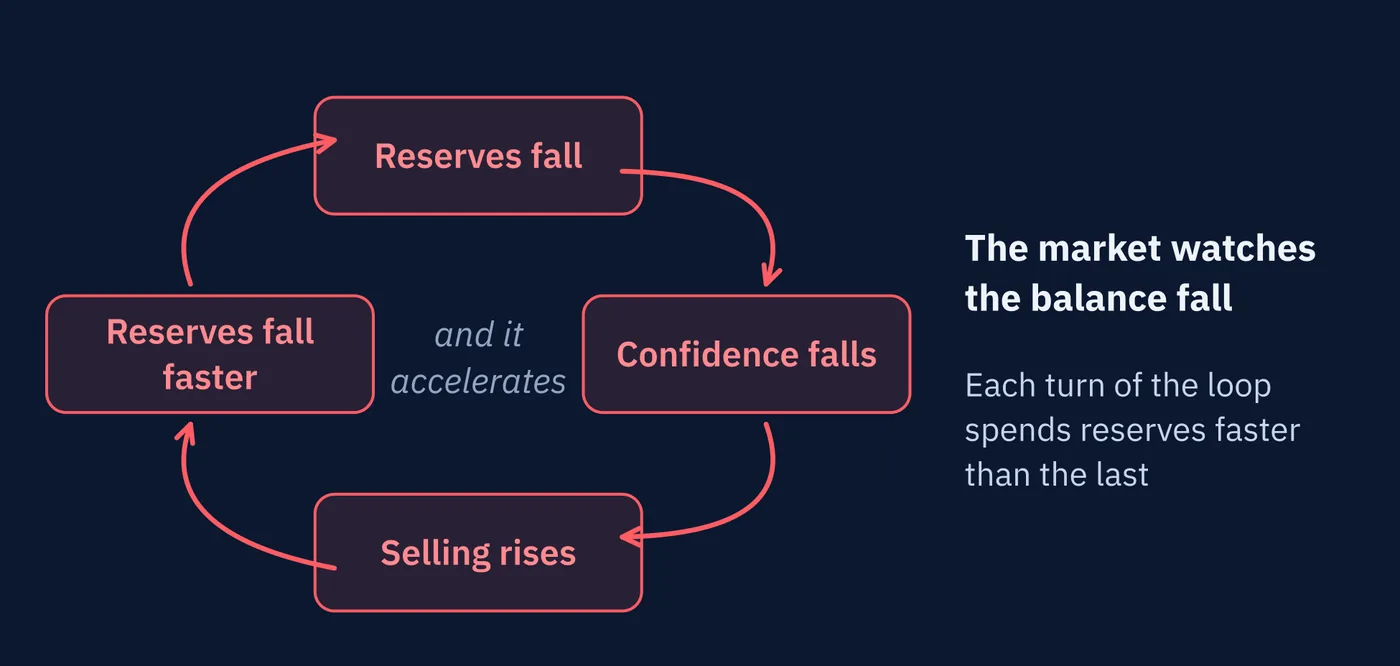
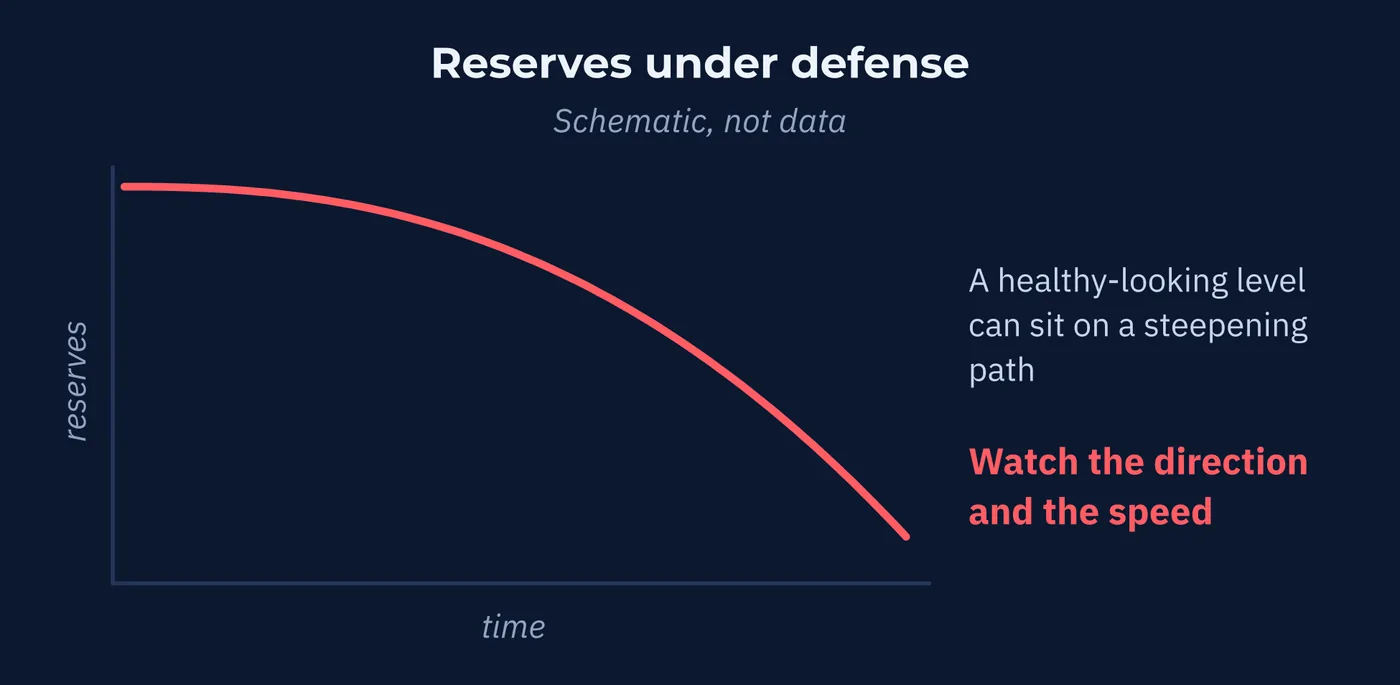
It is a loop, and it accelerates. So the level of reserves tells you less than the direction and the speed.
There is an asymmetry here that matters for Section 5. Holding down a currency that wants to rise is a different problem. The central bank sells its own currency, which it can create without limit. It does not run out. It accumulates, and accumulation has no natural ceiling.

3The Asymmetry That Invites an Attack
Speculative attacks look like aggression. They are better understood as arithmetic.
Consider what a participant risks by betting against a peg they believe is unsustainable.
| If the Peg Holds | If the Peg Breaks |
|---|---|
| You pay the cost of carrying the position | You gain the entire size of the devaluation |
| A known, limited, ongoing expense | Potentially very large, and it arrives at once |
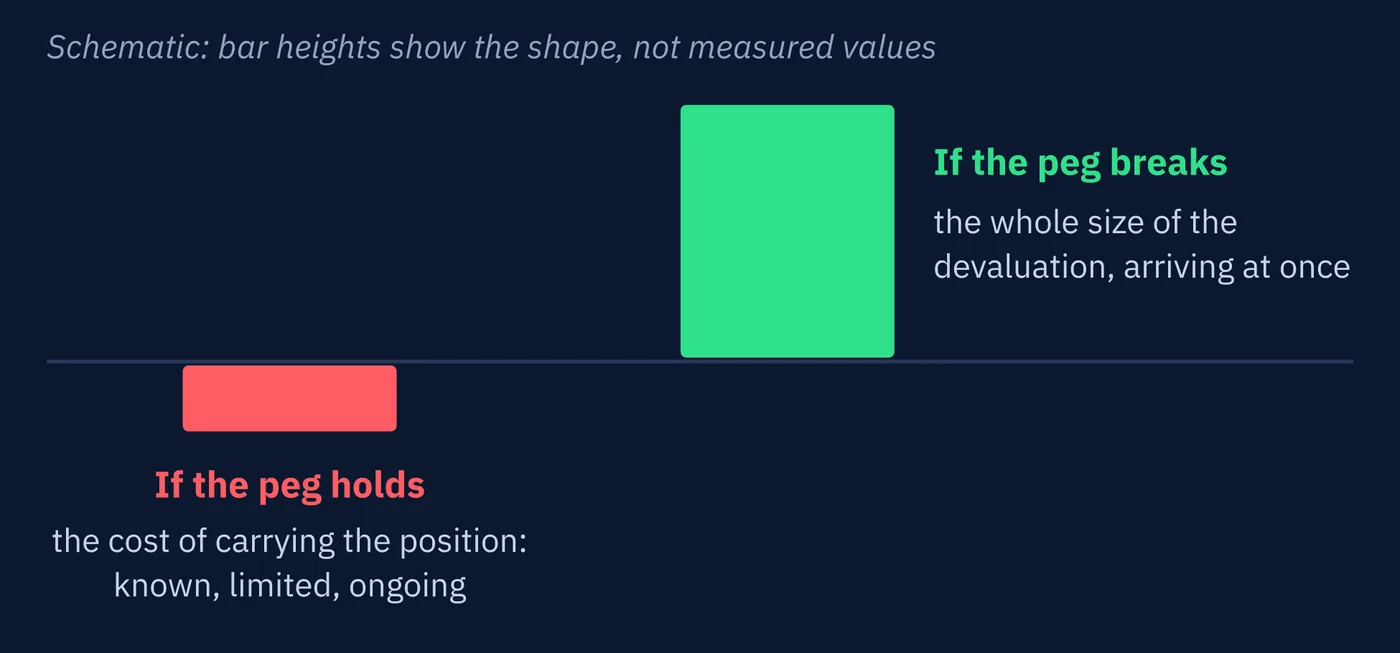
Limited downside, large upside. When the conditions are right, that bet is not reckless. It is the sensible response to the numbers.
Which is why a visibly misaligned peg attracts pressure. The misalignment does not just weaken the rate. It gives others a profitable reason to push.
4Black Wednesday
On September 16, 1992, the Bank of England attempted to defend sterling's place in Europe's exchange rate mechanism against exactly that arithmetic.
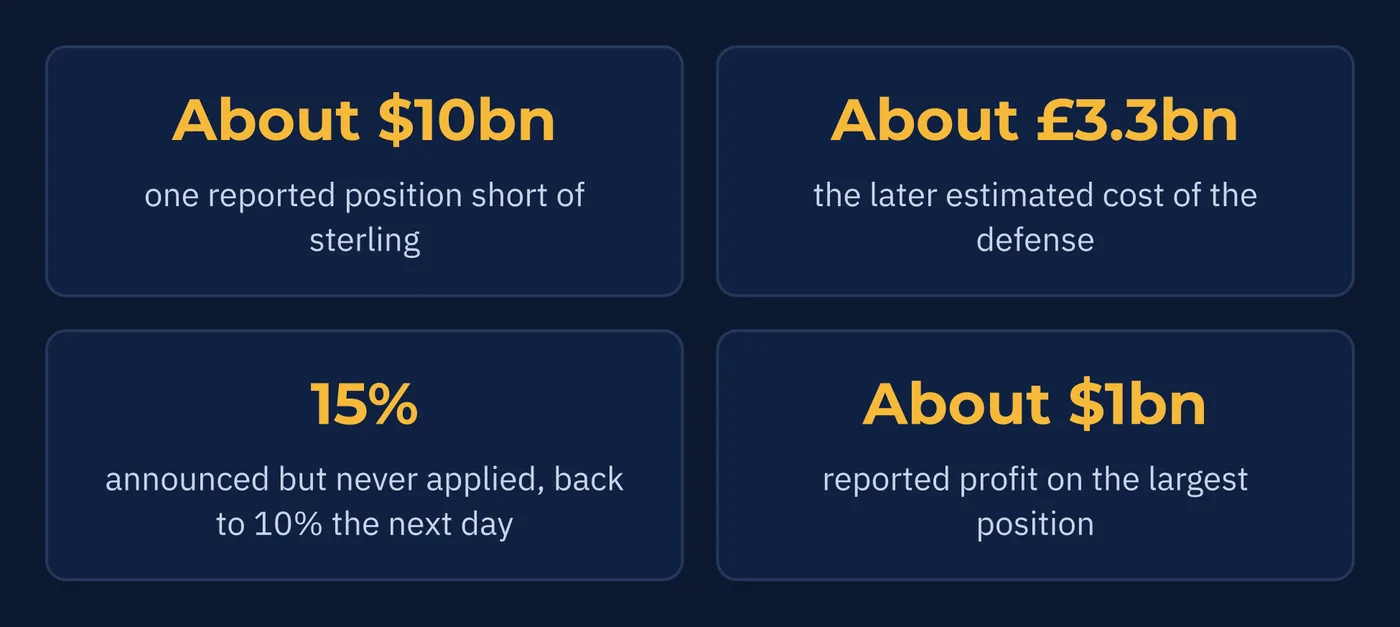
Several participants had concluded the pound was held above what the British economy justified. They also judged that Britain's weak conditions made sustained high interest rates politically impossible. One reported position was around ten billion dollars short of sterling.
The Bank used two of the three tools from Lesson 34, at extraordinary scale, in a single day.
| The Defense | What Happened |
|---|---|
| Reserve intervention | Billions of pounds of reserves spent, at a later estimated cost of about £3.3 billion |
| Interest rates | Raised from 10 percent to 12 percent, then 15 percent announced but never applied, in one day |
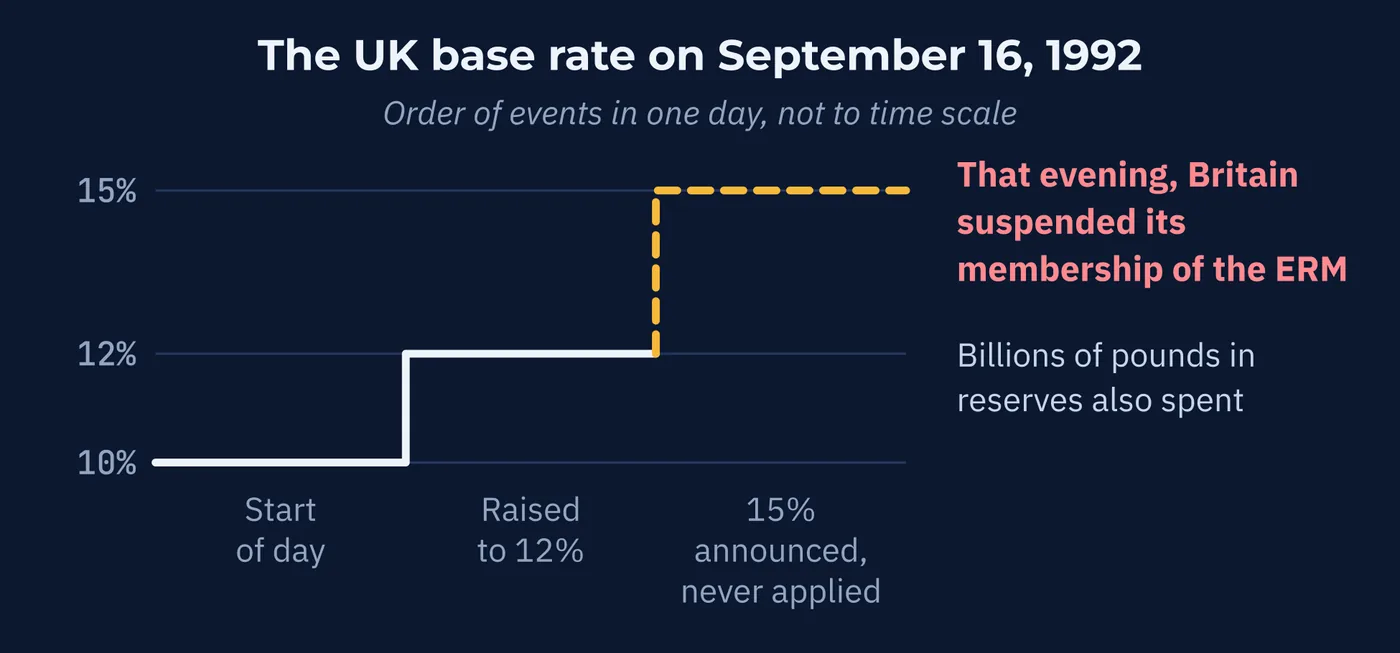
Neither worked. And the second one failed in a revealing way.
Rates that high would obviously damage an already weak economy, and nobody believed they could last. The defense was so extreme that it advertised desperation. It undermined confidence rather than restoring it.
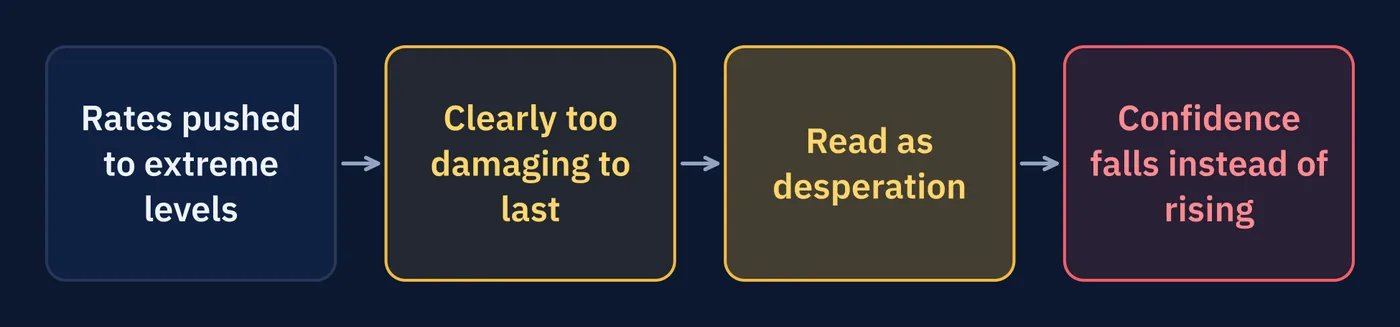
The 15 percent rate never took effect. By that evening Britain had suspended its membership and sterling fell, and the next day rates were back at 10 percent. The reported profit on the largest position against it was about a billion dollars.
5The Fourth Mechanism
Now the event that matters most to anyone trading with leverage, and it is almost always described wrongly.
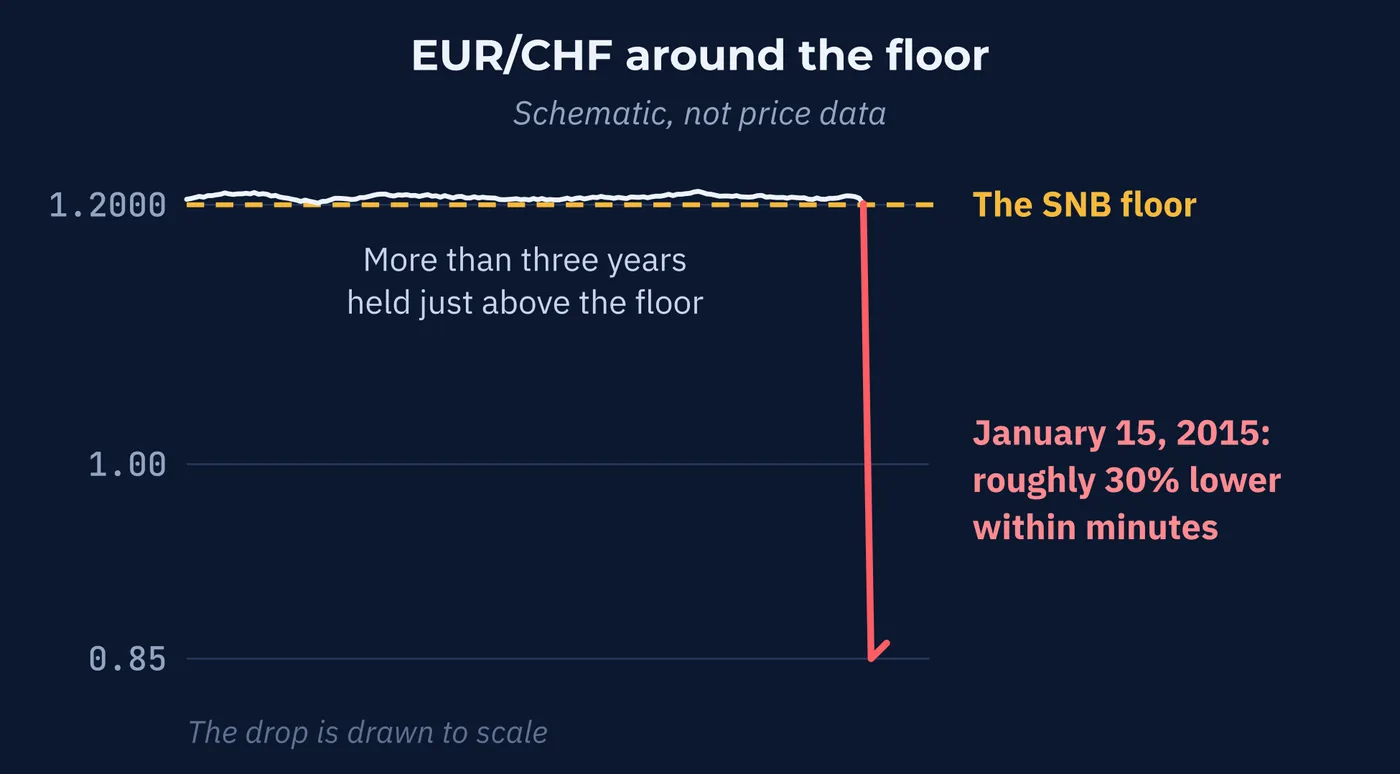
For more than three years the Swiss National Bank held a floor under EUR/CHF at 1.2000. It would not let the euro fall below that against the franc, and it defended the level successfully throughout.
On the morning of January 15, 2015 the pair was trading around 1.2010. There was no attack underway. There was no failed defense. There was no crisis.
And the SNB was not running out of anything.
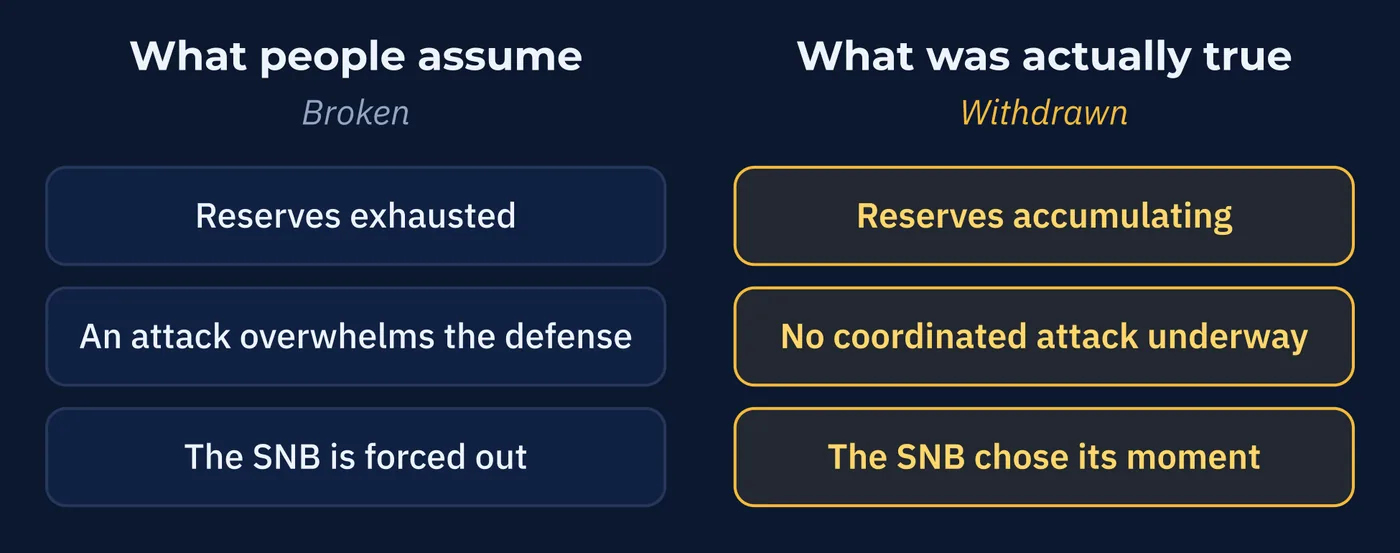
| What People Assume | What Was Actually True |
|---|---|
| Reserves were exhausted | Reserves were accumulating, toward roughly 80 percent of Swiss GDP |
| A speculative attack overwhelmed the defense | No coordinated attack was underway |
| The SNB was forced out | The SNB chose its moment |
Recall the asymmetry from Section 2. The SNB was holding down a currency that wanted to rise. That meant creating francs to buy euros, which it could do without limit. Capacity was never the constraint.
The problem was the European Central Bank, which was preparing a large asset purchase program. That would have forced the SNB to expand its balance sheet faster and faster, with no endpoint, holding euro assets whose value the program itself would push down.
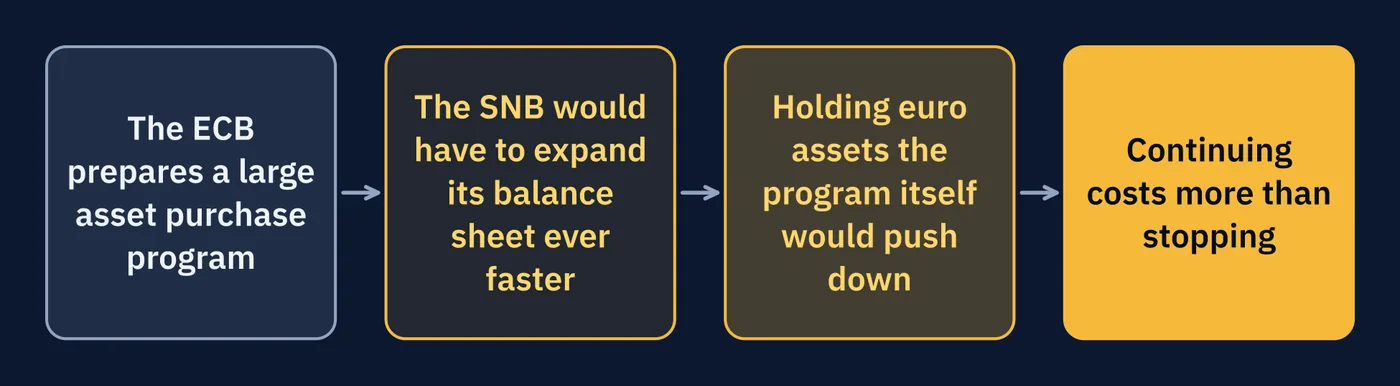
So the SNB judged that continuing cost more than stopping. It stopped on its own terms, rather than waiting to be overwhelmed.
The floor was not broken. It was withdrawn.
6Credibility Cuts Both Ways
The fifth mechanism explains why the announcement did what it did.
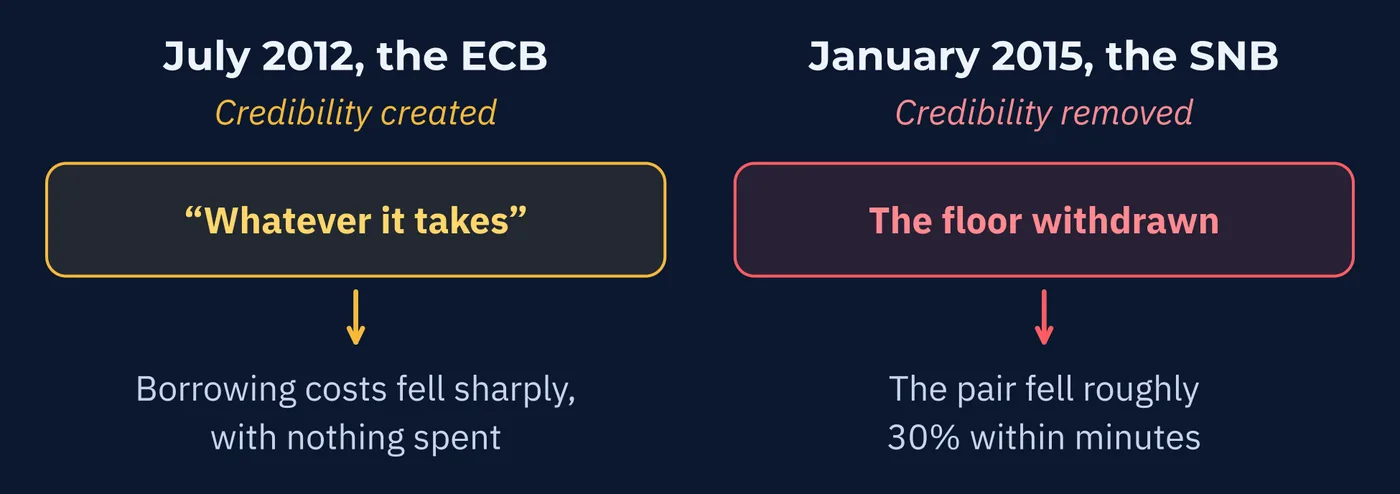
A credible institution needs less intervention, because belief does the work. If the market is sure a floor will hold, it stops testing it, and the defense becomes cheap. More than three years of success had made the SNB's commitment almost unquestioned.
Which means the floor was not being held up by reserves that morning. It was being held up by belief.
And belief does not erode. It switches off.
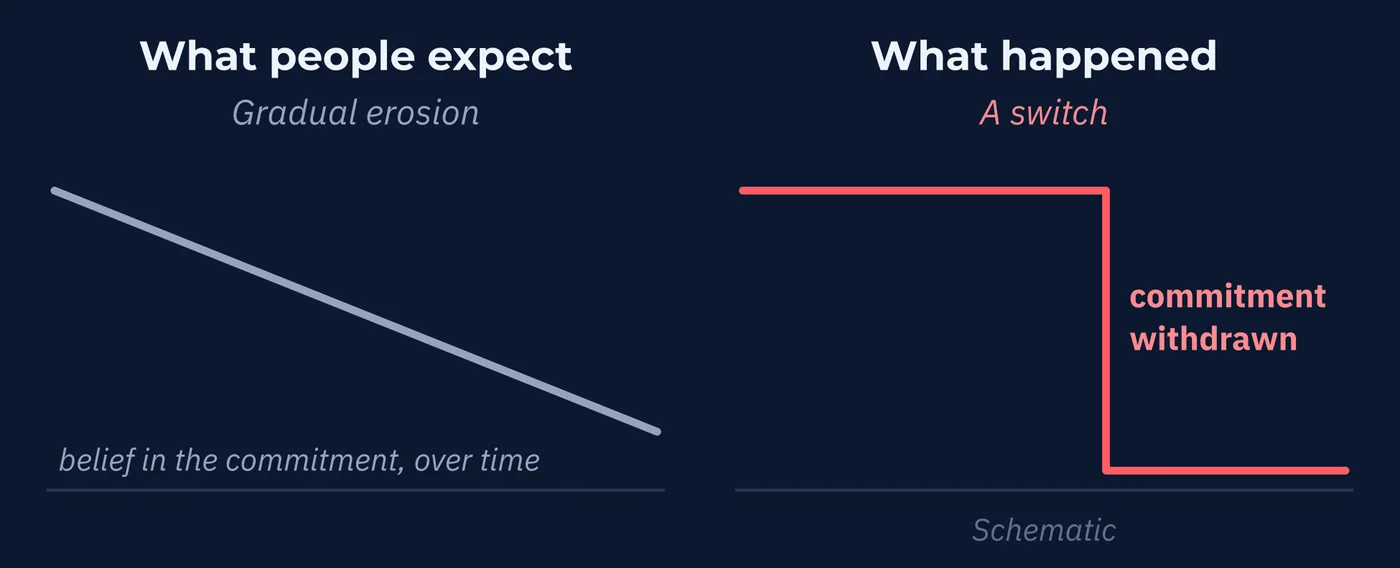
The moment the commitment was withdrawn, there was nothing left to be credible about. The pair fell roughly thirty percent within minutes. It had no reason to be near 1.2000 and never had, beyond the commitment itself.
7What It Did to Traders
This is why January 15, 2015 is studied rather than simply remembered.
For more than three years EUR/CHF near the floor was one of the calmest things on any screen. Tiny daily ranges, almost no movement, week after week.
A trader sizing a position by that daily range was making a specific and understandable error.
That calm was not the pair's volatility. It was the floor, seen from above.
Remove the constraint and the genuine volatility appears instantly, because it had been there all along, held down.
The practical conclusion is one line, and it applies to any pair near an institutional commitment. Here it is.
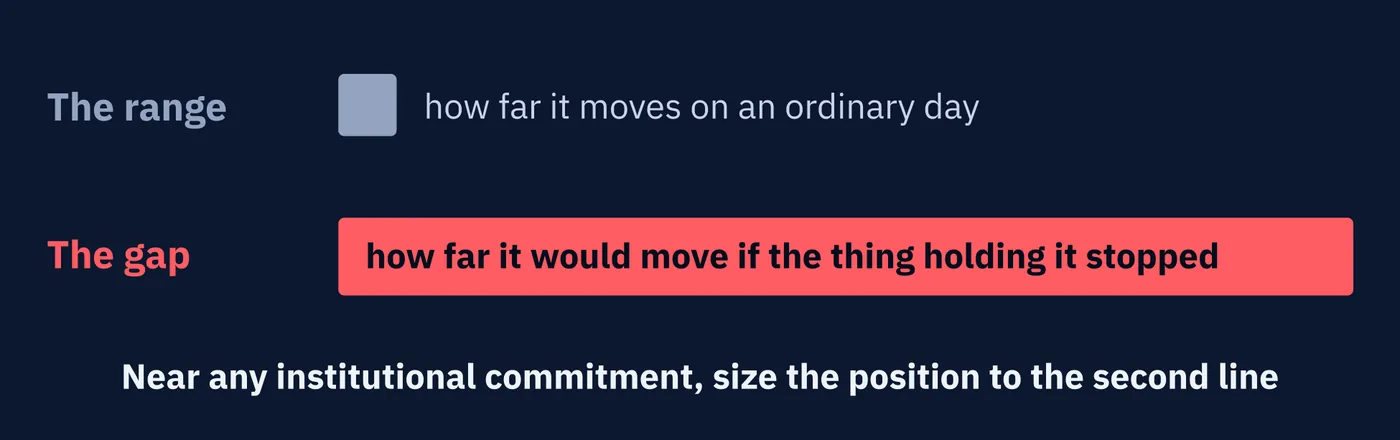
Size to the gap, not to the range. The relevant question is not how far the pair moves on an ordinary day. It is how far it would move if the thing holding it stopped.
8The Same Pattern, in Crypto
Everything in this lesson transfers directly to something from Lesson 11, and the mapping is exact.
| Type of Stablecoin | Its Currency Equivalent | Why |
|---|---|---|
| Fiat-backed | A currency board | Reserve assets mechanically back the peg |
| Algorithmic | A credibility-based commitment | No reserve backstop. The peg holds because people believe it will. |
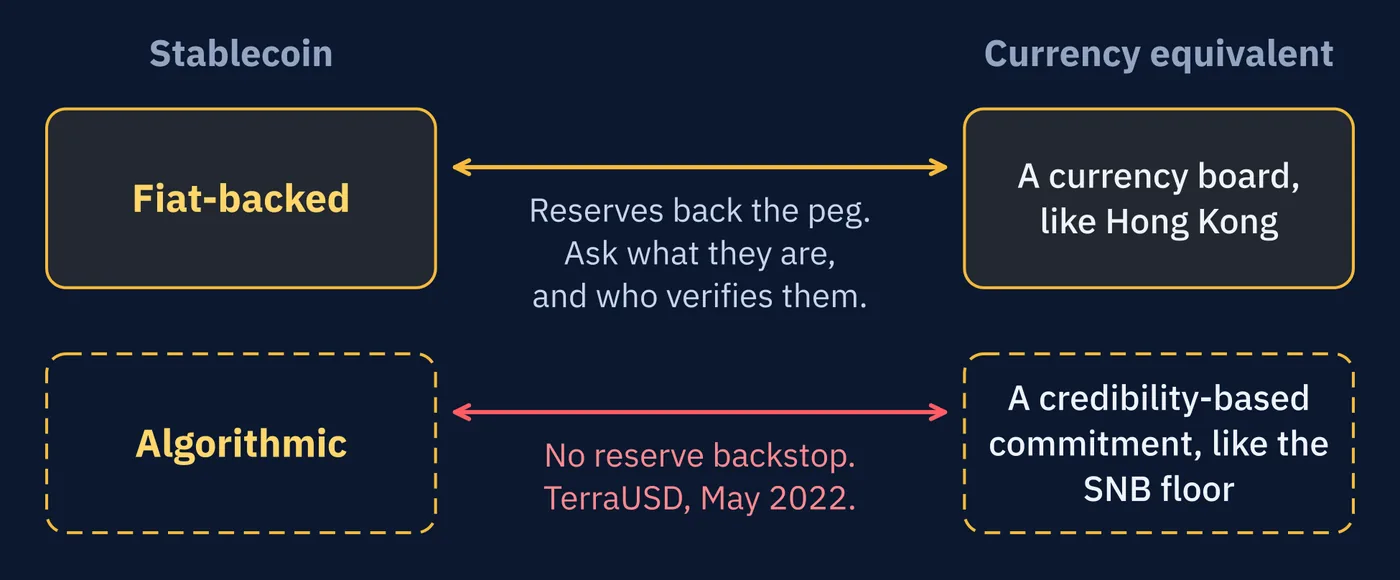
Lesson 11 made the point that a stablecoin's dollar is a company's promise rather than a country's. This lesson gives you the framework for what that promise rests on.
A fiat-backed stablecoin sits in the same category as Hong Kong's arrangement. Reserves back every unit, and the question worth asking is what the reserves actually are and who verifies them.
An algorithmic one sits in the same category as the SNB floor. The peg holds because participants believe the mechanism will restore it. When TerraUSD collapsed in May 2022, its dollar was an institutional price rather than a market one. It failed exactly as this lesson describes. Belief went, and there was no reserve underneath.
What This Series Was For
Seven lessons ago the question was what money actually is. The answer was a structure of trust with four pillars, and one of them moving faster than the others.
Then where money comes from, and that most of it is lent into existence rather than printed. Then gold, where an exchange rate was arithmetic until it met something governments cared about more. Then Bretton Woods, designed by people who had lived through the alternative, carrying a contradiction from day one. Then the afternoon it ended, with no announcement when the replacement arrived.
And then the regimes operating now, and how they end.
Every monetary commitment is held by an institution that could choose to stop.
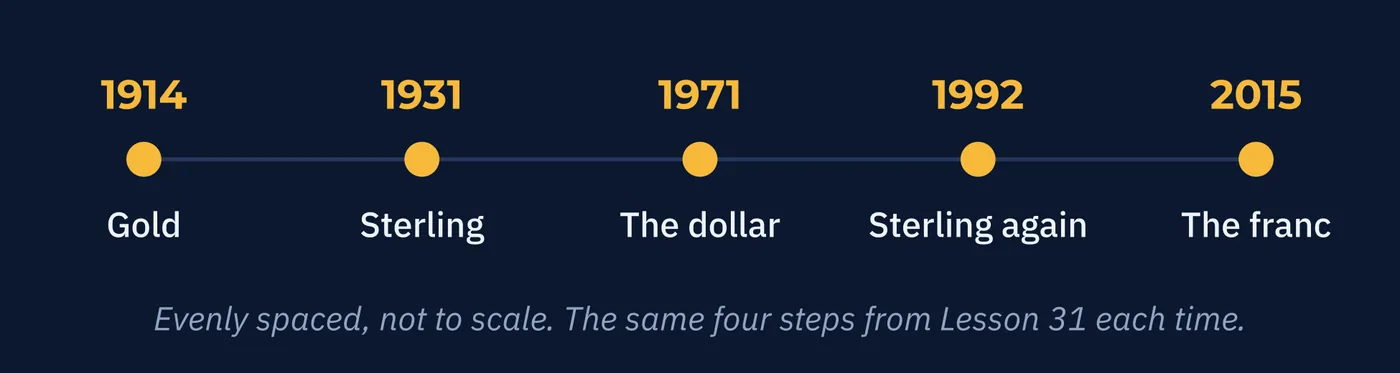
That is the thread. Gold in 1914. Sterling in 1931, and again in 1992. The dollar in 1971. The franc in 2015. Different centuries, different instruments, and the same four steps from Lesson 31 arriving at the same place.
The next series asks the question this one keeps circling. The dollar sits at the center of the system by historical accident rather than design. What is that position actually worth, and what would it take to lose it?
Three Things to Remember
Try This
Fifteen minutes. One chart tells most of this story by itself.
Words From This Lesson
| Term | What It Means |
|---|---|
| Reserve depletion | Running down the foreign reserves used to defend a rate. Self-reinforcing, because falling reserves invite more selling. |
| Fundamental misalignment | A declared rate that has drifted far from what the economy justifies. |
| Speculative attack | Large-scale betting against a rate, made rational by limited carry cost against a potentially large devaluation gain. |
| Voluntary abandonment | An institution ending a commitment on its own terms, before being forced to. |
| Credibility withdrawal | The loss of belief in a commitment. Instant and complete, and it does not require a failed defense. |
| Gap risk | The distance a price can travel with no trading in between, leaving exit instructions unfilled at their stated level. |
| Institutional price | A price held where it is by a commitment rather than by supply and demand. |
Test Your Knowledge
Eight questions. Answer them all before checking the key on the following pages. If a question gives you trouble, the answer key tells you which section to revisit.
- A. Reserves are automatically replenished
- B. Falling reserves reduce confidence, which increases selling, which depletes reserves faster
- C. Central banks must spend reserves at a fixed daily rate
- D. It only applies to currency boards
- A. Limited carry cost if the peg holds, large gain if it breaks
- B. Attacks always succeed
- C. Central banks rarely defend their pegs
- D. Regulators permit it
- A. Confidence was restored and the peg held
- B. It succeeded but the cost was too high
- C. Interest rates were not used in the defense
- D. The move was so extreme it undermined confidence rather than restoring it
- A. Accumulating, toward roughly 80 percent of Swiss GDP
- B. Nearly exhausted
- C. Roughly unchanged for three years
- D. Not publicly disclosed
- A. It was overwhelmed by a speculative attack
- B. The Swiss government ordered it
- C. Continuing would have cost more than stopping, so it chose its own moment
- D. Its reserves ran out
- A. A speculative attack was already underway
- B. Trading was suspended and reopened lower
- C. The floor was held up by belief, and belief switches off rather than eroding
- D. The ECB intervened simultaneously
- A. To the pair's recent average daily range
- B. To the gap risk, meaning the distance to a fully broken level
- C. To the stop loss distance, since that defines the loss
- D. Position size is irrelevant near a floor
- A. A currency board
- B. A crawling peg
- C. A free float
- D. A credibility-based commitment with no reserve backstop
Answer Key
Each answer explains why the correct choice is correct, why the others are not, and where to reread.
Question 1 · correct answer B
It is a loop. Visibly falling reserves reduce confidence in the defense, which brings more selling, which drains reserves faster. The direction of travel matters more than the level.
A describes something that does not happen, since reserves must be earned or borrowed. C invents a fixed spending rule. D reverses it, as currency boards are the arrangement least exposed to this.
Review: Section 2, Reserve Depletion Feeds Itself
Question 2 · correct answer A
The loss if the peg holds is the ongoing cost of carrying the position. The gain if it breaks is the full devaluation. Limited downside against large upside makes the bet sensible when conditions support it.
B is wrong because many attacks fail and the attacker pays. C is wrong because central banks defend vigorously, as 1992 showed. D confuses legality with the arithmetic that motivates the trade.
Review: Section 3, The Asymmetry That Invites an Attack
Question 3 · correct answer D
Rates that high were plainly unsustainable for a weak economy. The severity of the defense advertised desperation and reduced confidence rather than rebuilding it.
A is wrong because sterling left the mechanism that evening. C is wrong because rates were the second tool deployed. B is wrong because the defense did not succeed at any cost.
Review: Section 4, Black Wednesday
Question 4 · correct answer A
Reserves were rising, not falling. The SNB was holding down a currency that wanted to strengthen, which meant creating francs to buy euros, and that has no mechanical limit.
B is the common assumption and the opposite of the facts. C is wrong because accumulation was rapid. D is wrong because reserve data is published.
Review: Section 5, The Fourth Mechanism
Question 5 · correct answer C
An approaching European asset purchase program would have required accelerating balance sheet expansion with no natural endpoint. The SNB judged that continuing cost more than exiting and chose its timing.
A is wrong because no attack was underway that morning. B is wrong because the decision was the central bank's. D contradicts the reserve position, which was growing.
Review: Section 5, The Fourth Mechanism
Question 6 · correct answer C
More than three years of successful defense meant the floor was sustained by belief rather than by active intervention. Once the commitment was withdrawn, there was nothing left to believe in, and the pair found its own level at once.
A is factually wrong, since the pair was quiet that morning. B describes a trading halt rather than what occurred. D introduces an intervention that did not happen.
Review: Section 6, Credibility Cuts Both Ways
Question 7 · correct answer B
Compressed volatility near a commitment reflects the constraint rather than the pair. The relevant distance is how far the price would travel if the commitment ended.
A sizes to the managed surface, which is the error that emptied accounts in 2015. C treats a stop loss as a guarantee, which gap risk makes false. D abandons the decision rather than making it correctly.
Review: Section 7, What It Did to Traders
Question 8 · correct answer D
An algorithmic stablecoin has no reserve backstop. Its peg holds because participants believe the mechanism will restore it, which is the same structure as a credibility-based currency commitment.
A describes a fiat-backed stablecoin, where reserves mechanically back each unit. C describes a price set by the market, which a peg is not. B describes a rate adjusted gradually on a schedule.
Review: Section 8, The Same Pattern, in Crypto
Keep going
Where Money Came From is written by Kanin D. Alldredge for The Currency Classroom, and it is free to read. There is more free from CNS: start here.
Start free with CNS →