What Bitcoin Was Trying to Solve

1Copy This Sentence
Take any digital thing. A photograph, a document, a song.
You can copy it perfectly, instantly, at no cost, as often as you like. The copy is not a worse version. It is identical, and nothing tells the original from the duplicate.
That property is why digital life works. It is also why digital money was impossible for decades.
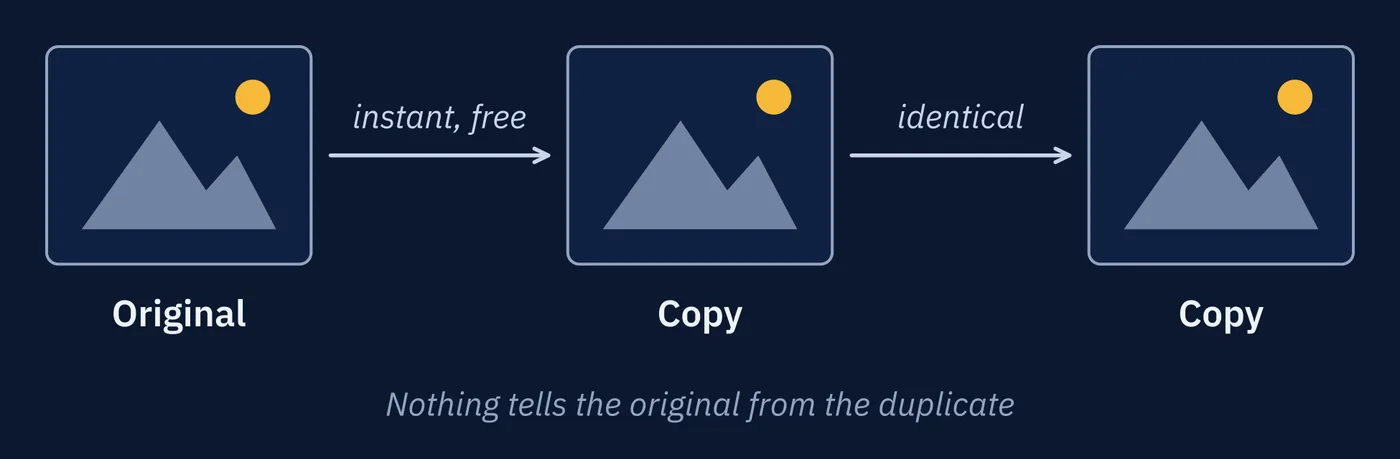
Money that can be copied perfectly is not money.
2The Double-Spend Problem
Give the problem its name.
The double-spend problem is this. If a unit of digital money is just data, nothing stops you sending the same unit to two different people at the same time. Both receive something that looks completely valid.
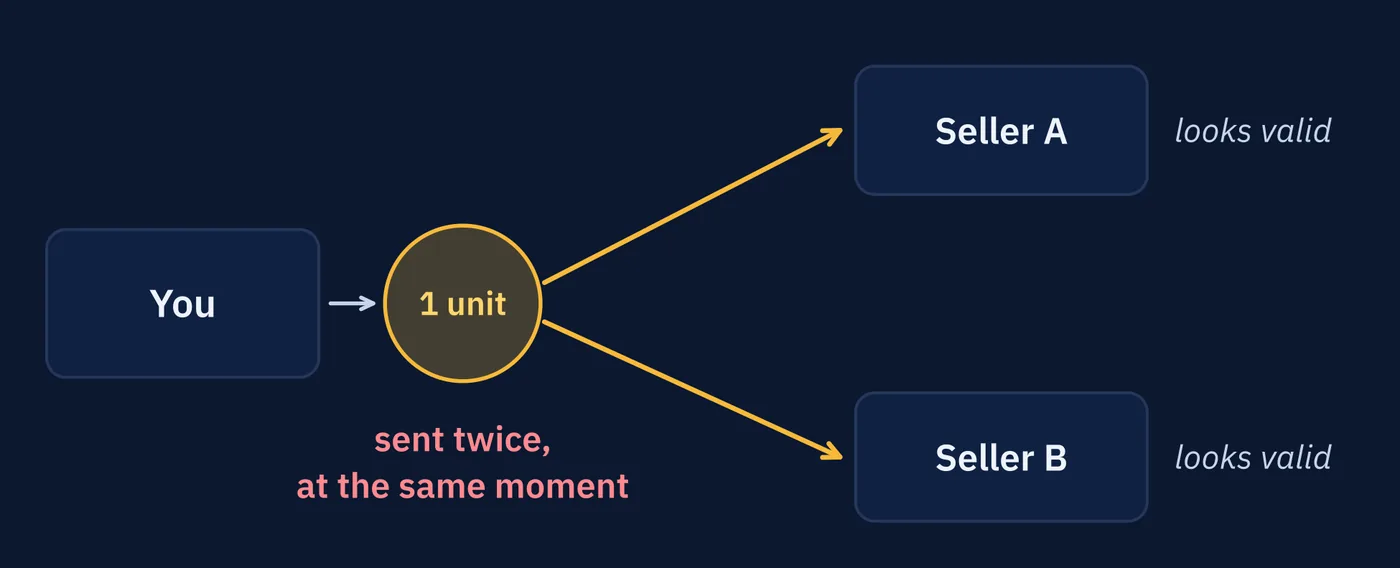
Physical cash does not have this problem.
| A Twenty-Dollar Note | A Digital Token |
|---|---|
| Only one person can hold it | Can be copied perfectly |
| Handing it over means giving it up | Sending it need not mean losing it |
| Physically impossible to spend twice | Trivially easy to spend twice |
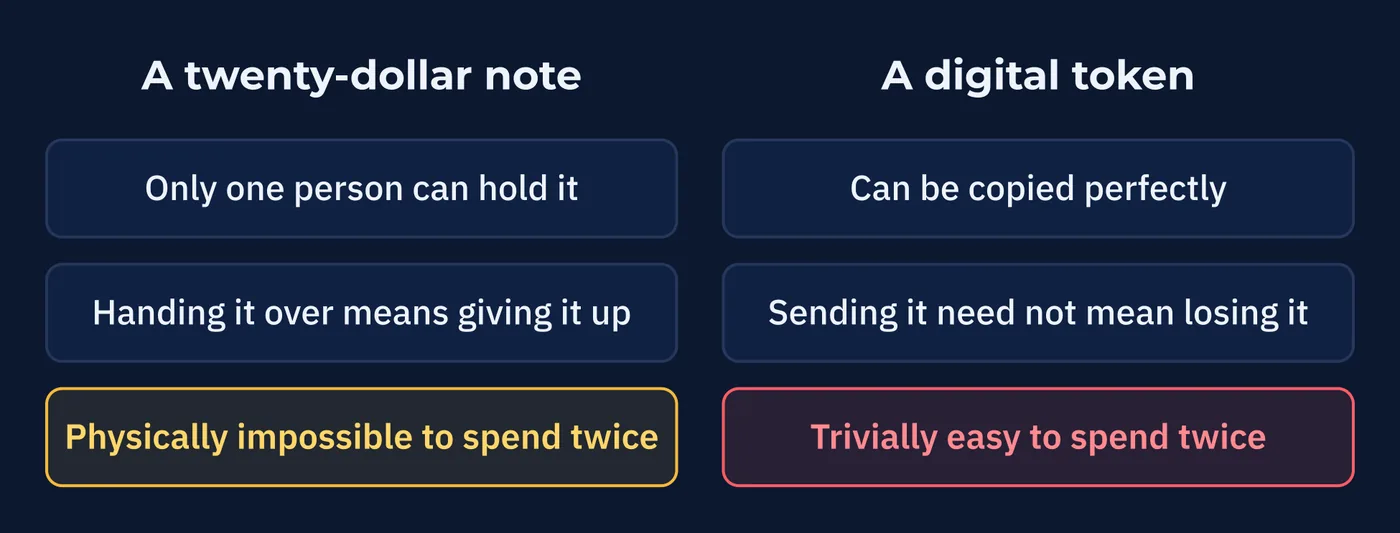
Lesson 29 said money must work as a medium of exchange. This is that test failing at the first step. A seller who cannot be sure the money they received was not also sent elsewhere will not accept it.
3How Everyone Solved It
Every digital payment system before 2009 used the same solution. Put somebody in charge of the list.
A bank keeps a ledger of who has what. When you send money, it checks your balance, subtracts from your line, adds to theirs, and updates the record.
There is one ledger, and one organization allowed to change it. So the same money cannot be in two places. The record says where it is, and everyone accepts the record.
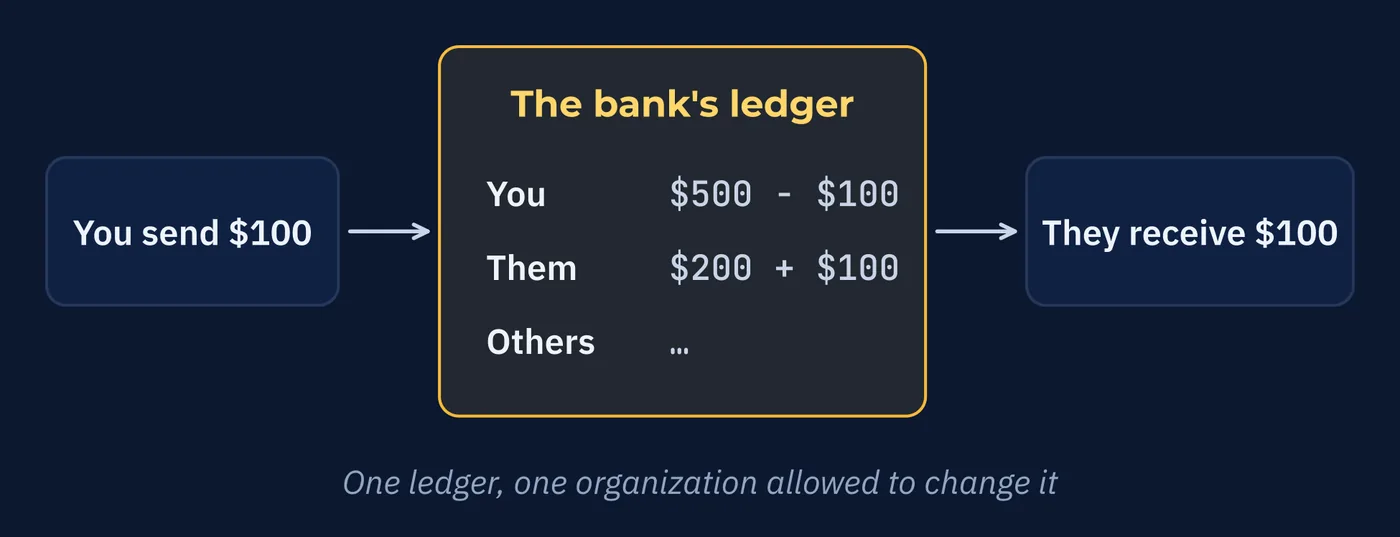
This works. It has worked for a long time. It works right now, and Lesson 30 described how the money in that ledger gets created in the first place.
But look at what it requires.
4What Trusting Someone Costs
The arrangement in Section 3 rests entirely on one thing. The institution keeping the ledger being honest and competent.
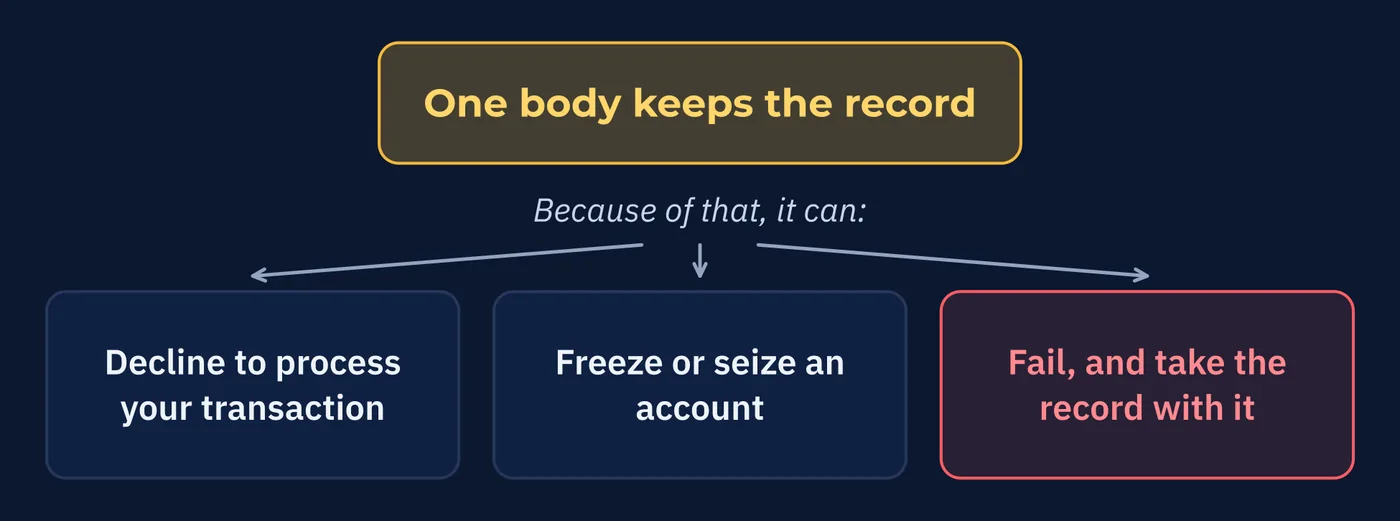
| Because One Body Keeps the Record | It Can |
|---|---|
| It decides which transactions are valid | Decline to process yours |
| It holds the authoritative balance | Freeze or seize an account |
| It is a single system | Fail, and take the record with it |
That is a single point of failure. Not a criticism of banks in particular, but a description of what centralizing a record does. Whoever keeps the list has power over it, and if they fail, there is no second copy that disagrees.
For most people, in most countries, most of the time, that is a good trade. The institution is reliable and the convenience is enormous.
The interesting question is whether it is the only possible arrangement.
5Everybody Keeps the Ledger
In 2008 a paper appeared under the name Satoshi Nakamoto, proposing something different. The first coins were created in January 2009.
The idea inverts the usual arrangement. Instead of one authoritative ledger, have thousands of copies, held by independent participants all over the world.
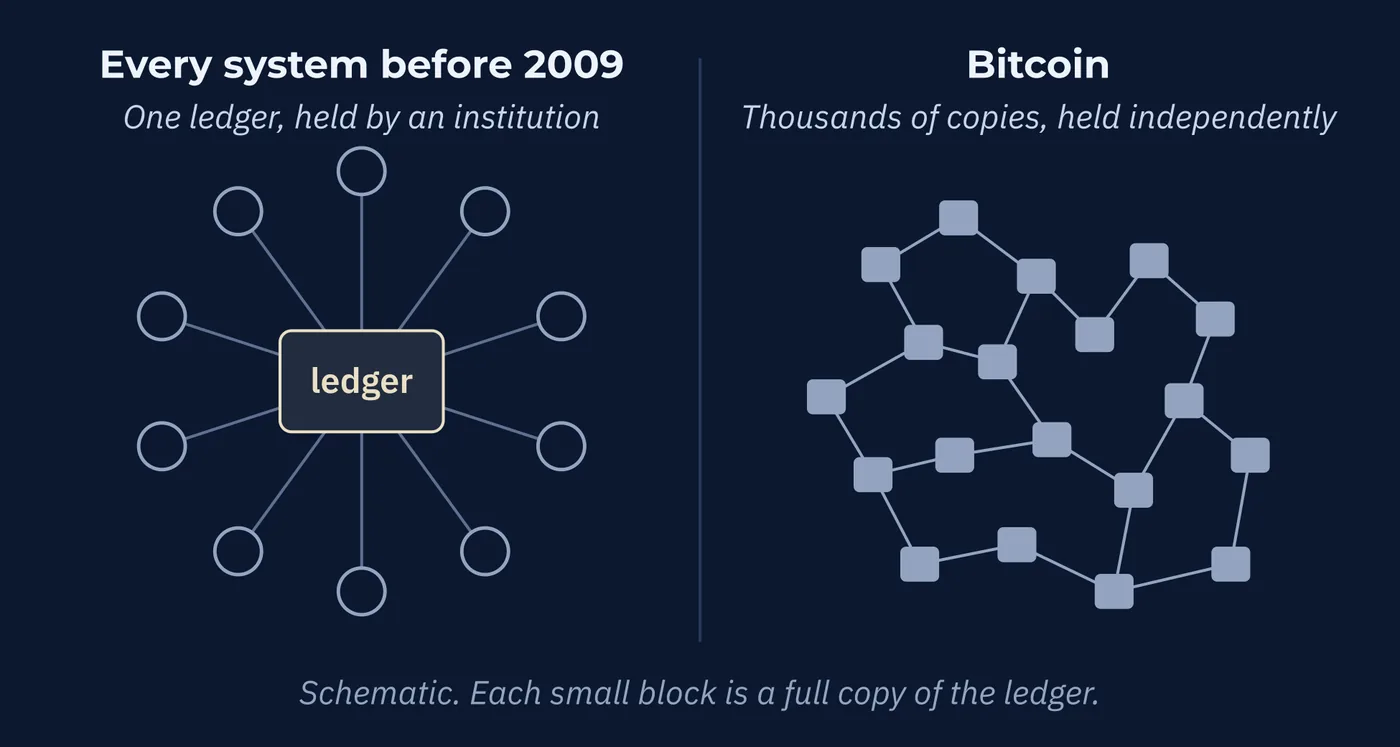
| The Old Way | The New Way |
|---|---|
| One ledger, held by an institution | Thousands of copies, held independently |
| The institution decides what is valid | A procedure decides, and all copies follow it |
| You trust the institution | You trust the procedure |
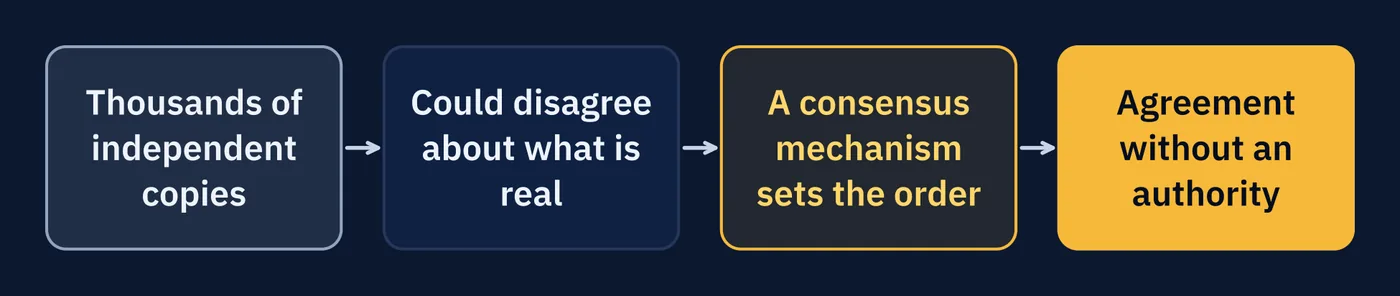
Which raises an obvious objection. Thousands of independent copies means thousands of chances to disagree. What keeps them the same?
The answer is a consensus mechanism, a procedure that lets participants who do not know or trust each other agree on which transactions are real and in what order. Lesson 48 explains how it works.
For now, what matters is what it achieves. Agreement without an authority.
6A Protocol, Not a Company
This produces something people consistently misunderstand. And it changes what Bitcoin can fairly be compared to.
Bitcoin is a protocol. There is nothing to acquire, sue, or shut down.
No management team. No headquarters. No board, no shareholders, nobody who can change the rules by deciding to. It is a set of rules that thousands of independent computers choose to follow. It continues as long as they keep following them.
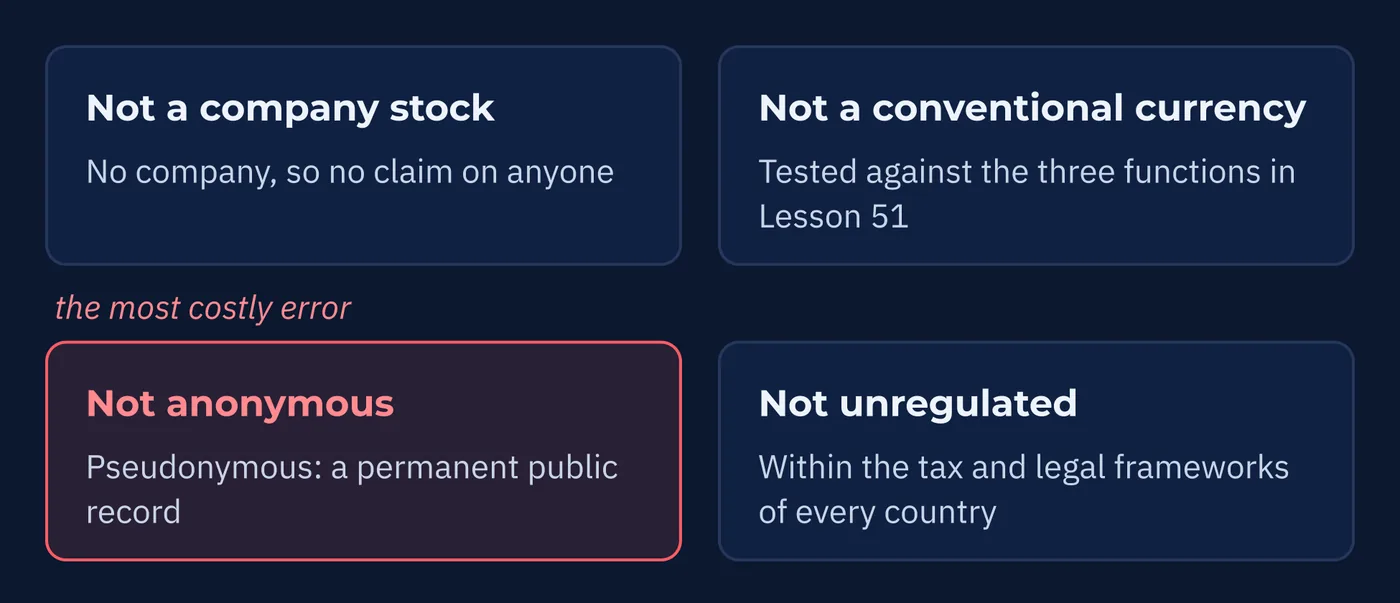
The result of a permanent public ledger: The first transaction between two people, ten Bitcoin sent from its creator to an early collaborator in January 2009, is still visible today. Exactly as recorded, seventeen years on.
7Twenty-One Million
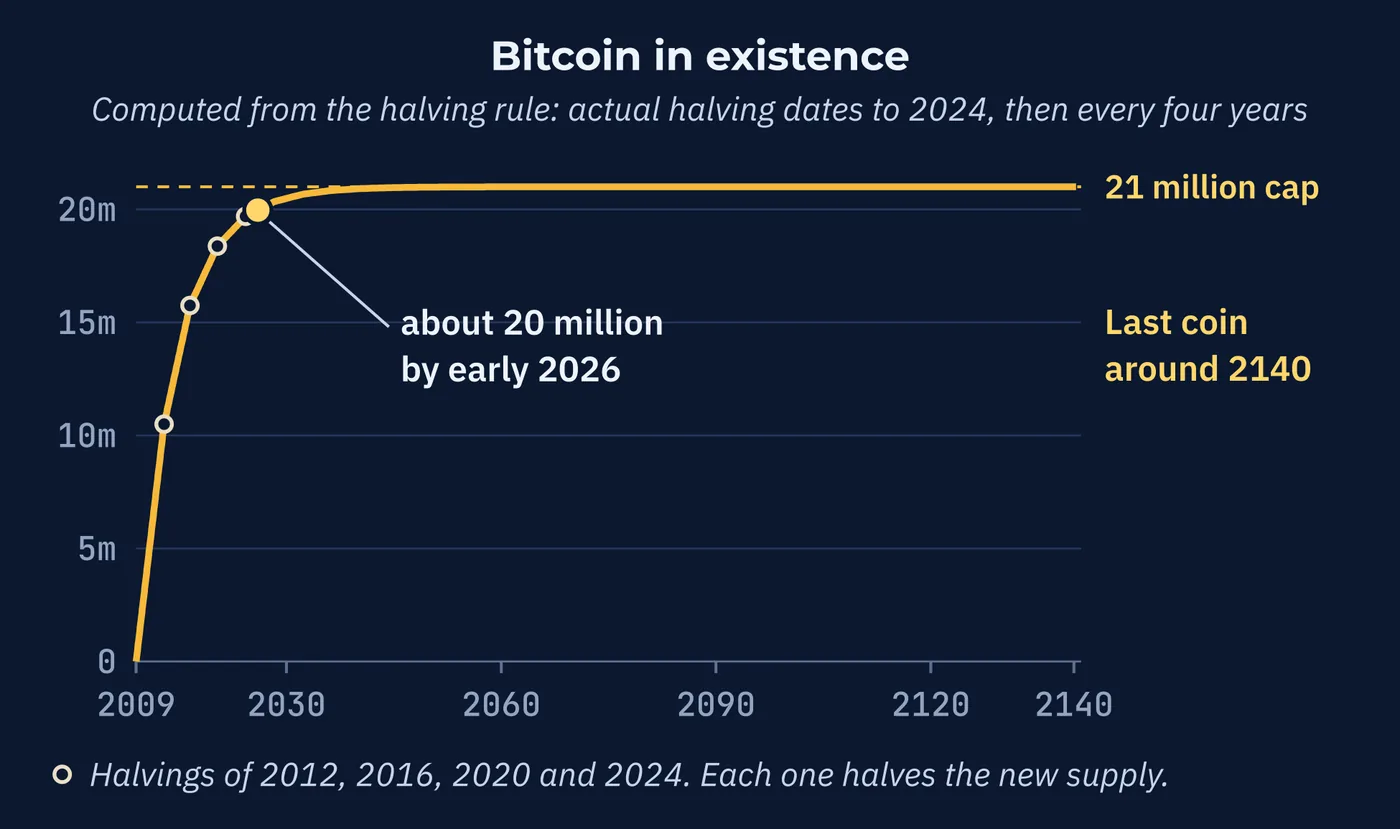
The supply is fixed in the code. Twenty-one million units, and no mechanism exists to issue more.
New coins enter circulation on a schedule that slows over time. The rate roughly halves every four years, until the last coin is produced around the year 2140.
| Amount | Share | |
|---|---|---|
| Maximum that will ever exist | 21 million | - |
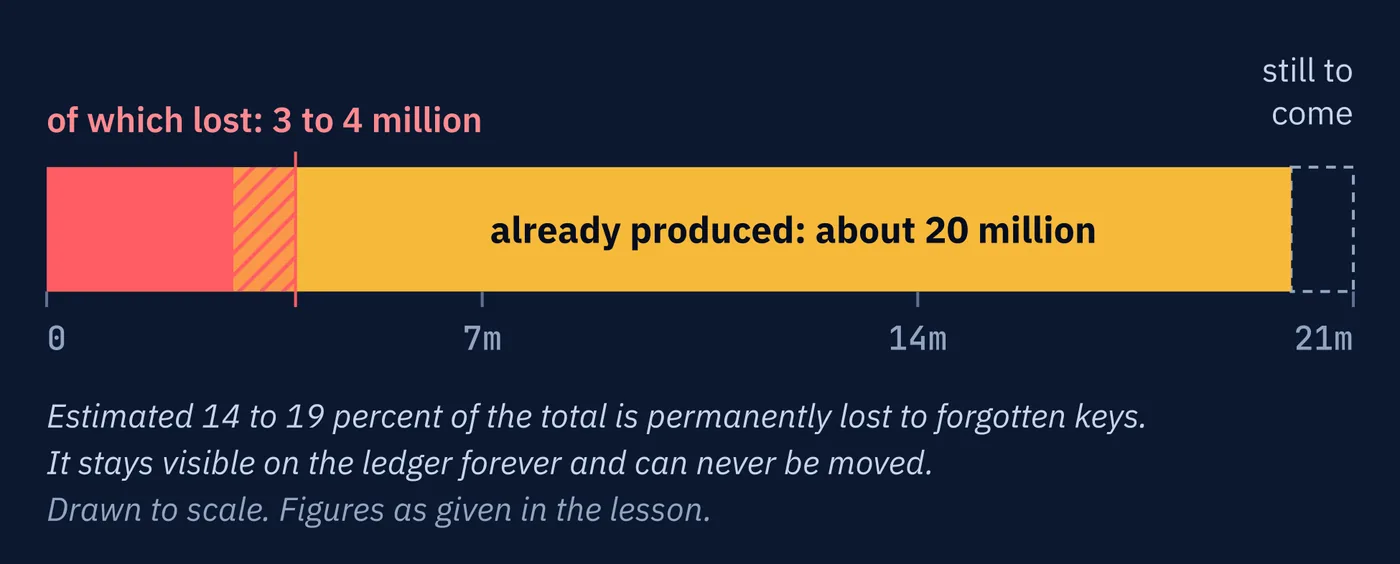
| Already produced, as of early 2026 | About 20 million | About 95 percent |
| Estimated permanently lost to forgotten keys | 3 to 4 million | 14 to 19 percent |
That third row has no equivalent in ordinary money. A lost bank password is recoverable, because an institution holds the record and can verify who you are. There is no institution here. A lost key means the coins stay visible on the ledger forever, and can never be moved.
8Why That Number Is an Argument
Twenty-one million is not arbitrary. It is a response to something this course has already covered in detail.
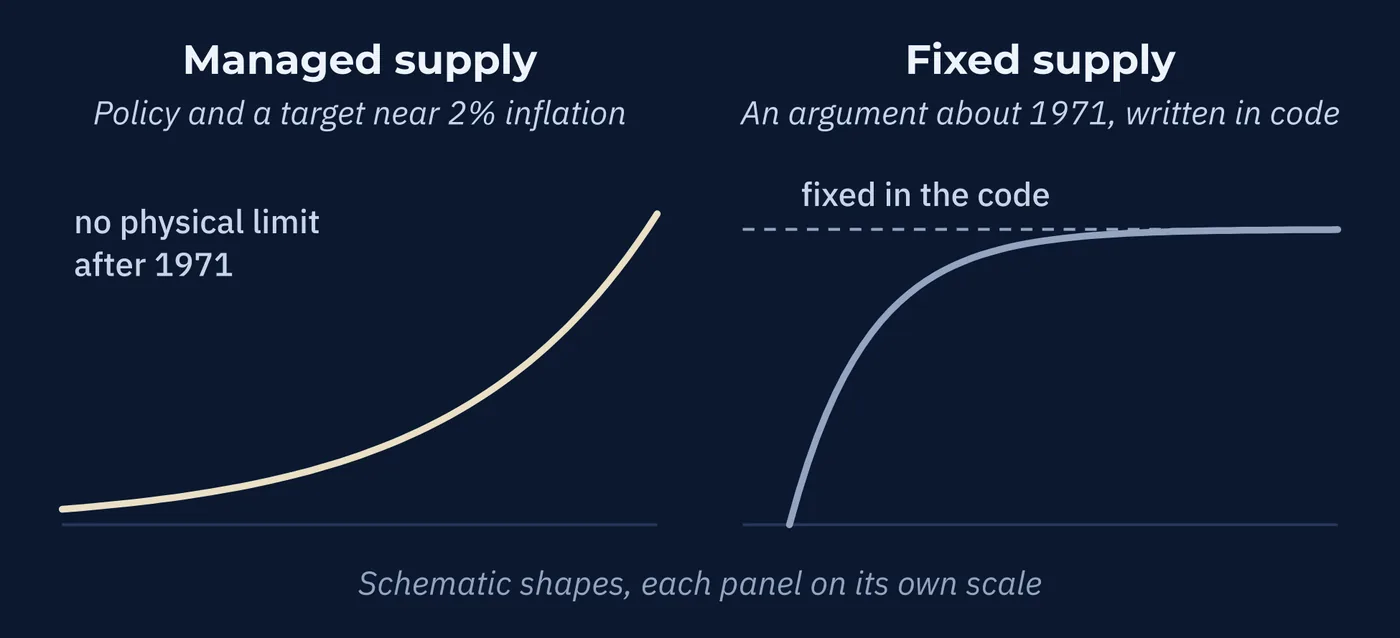
Lesson 33 dated the moment gold convertibility ended. After August 1971, nothing physical limited how much currency could exist. Lesson 30 explained what replaced that limit. Policy, institutional judgment, and a deliberate target of about two percent inflation a year.
Lesson 30 also worked out what that target does. Money halves in purchasing power in roughly thirty-five years, by design.
A fixed supply is an argument about 1971, written in code.
Whether it is a good argument is a separate question. Lesson 39 set out where it currently fails as a reserve asset. Volatility, no lender of last resort, and custody at institutional scale.
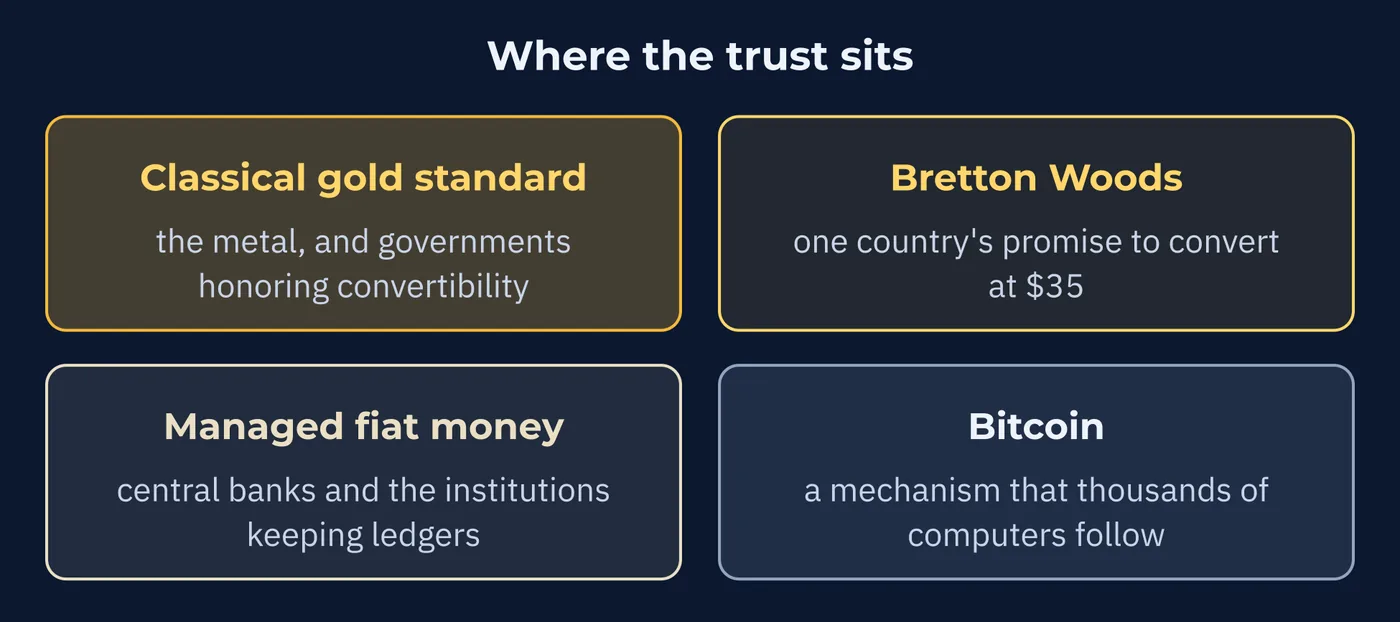
Which connects back to the deepest point in Series F. Lesson 29 concluded that every monetary system is a trust architecture, and only the location of the trust changes.
Bitcoin does not remove trust. It moves it, out of an institution and into a mechanism. The next lesson is about how that mechanism works.
Three Things to Remember
Try This
Fifteen minutes. One step involves looking at a seventeen-year-old transaction.
Words From This Lesson
| Term | What It Means |
|---|---|
| Double-spend problem | The difficulty that digital data copies perfectly, so a unit of digital money could be sent to two people at once. |
| Ledger | The record of who holds what. Banks keep one centrally. Bitcoin keeps thousands of identical copies. |
| Single point of failure | Any part of a system whose failure brings down the whole. A central record keeper is one. |
| Consensus mechanism | The procedure allowing participants who do not trust each other to agree on which transactions are valid. |
| Protocol | A set of rules that participants choose to follow. Bitcoin is one, which is why there is no company behind it. |
| Pseudonymous | Transactions are public and permanent, but addresses are not attached to names. Different from anonymous. |
| Fixed supply | A maximum quantity written into the code. Twenty-one million, with no mechanism to change it. |
Test Your Knowledge
Eight questions. Answer them all before checking the key on the following pages. If a question gives you trouble, the answer key tells you which section to revisit.
- A. Digital money can be copied, so the same unit could be sent to two people at once
- B. Paying twice for the same goods by mistake
- C. Currency exchange fees being charged twice
- D. Two banks recording the same transaction
- A. A trusted institution kept the single authoritative ledger
- B. Encryption made copying impossible
- C. Transactions were limited to small amounts
- D. The problem was never solved
- A. Higher transaction fees
- B. Reduced privacy only
- C. Slower settlement times
- D. The institution becomes a single point of failure
- A. A faster central database
- B. Thousands of independent copies kept in agreement by a procedure
- C. A government-run record
- D. An encrypted private ledger
- A. It is registered as a non-profit
- B. Its shares are not publicly traded
- C. It has no management, headquarters, or single point of control
- D. It operates only in certain countries
- A. Yes, transactions cannot be traced
- B. Only when used through an exchange
- C. Yes, but only for small amounts
- D. No, it is pseudonymous: transactions are public and permanent
- A. About 50 percent
- B. About 75 percent
- C. About 95 percent
- D. All of it
- A. A technical limit in the software
- B. The removal of physical constraints on currency supply after 1971
- C. International banking regulations
- D. The number of possible transactions
Answer Key
Each answer explains why the correct choice is correct, why the others are not, and where to reread.
Question 1 · correct answer A
Digital information copies perfectly, so nothing inherent stops the same unit being sent to two recipients simultaneously. Both would receive something that looks valid.
B describes a human error rather than a structural property. C describes a billing issue. D describes a reconciliation problem between institutions, not the underlying obstacle to digital money.
Review: Section 2, The Double-Spend Problem
Question 2 · correct answer A
One institution held the authoritative record and decided what was valid. Since only one ledger existed and only one body could change it, the same money could not be in two places.
B is wrong because encryption protects data without preventing duplication. C describes a limit that would not solve the problem. D is wrong because the problem was solved, just by centralizing it.
Review: Section 3, How Everyone Solved It
Question 3 · correct answer D
Whoever keeps the record has power over it, and if they fail there is no second copy that disagrees. That is a description of centralization rather than a criticism of banks.
A and C are practical consequences that vary between institutions. B is too narrow, since the concern covers control and failure as well as privacy.
Review: Section 4, What Trusting Someone Costs
Question 4 · correct answer B
Thousands of independent participants each hold a full copy, and a consensus mechanism keeps them in agreement without anyone needing to trust anyone else.
A keeps the central point of failure and only changes its speed. C substitutes one authority for another. D is wrong because the ledger is public rather than private.
Review: Section 5, Everybody Keeps the Ledger
Question 5 · correct answer C
There is no management team, no board, and nobody able to change the rules by deciding to. It is a set of rules that independent computers choose to follow.
A invents a legal status. B implies a company exists whose shares are simply unlisted. D describes where it is used rather than what it is.
Review: Section 6, A Protocol, Not a Company
Question 6 · correct answer D
Every transaction is permanently recorded on a public ledger. Addresses are not attached to names, which makes it pseudonymous, and a permanent record can be connected to a person later.
A is the most consequential misconception about Bitcoin. C invents a threshold. B reverses the position, since exchange use typically increases rather than reduces identifiability.
Review: Section 6, A Protocol, Not a Company
Question 7 · correct answer C
About 20 million of the 21 million maximum had been produced, roughly 95 percent, with the remainder released on a slowing schedule until around 2140.
A and B understate it considerably. D is wrong because issuance continues, though at a rate that halves roughly every four years.
Review: Section 7, Twenty-One Million
Question 8 · correct answer B
After gold convertibility ended in 1971, nothing physical limited currency supply. A quantity fixed in code is a direct response to that, and Lesson 30 showed what the resulting inflation target does over time.
A reverses it, since the limit was chosen and then written into the software. C describes rules that do not govern Bitcoin's supply. D confuses supply with transaction capacity.
Review: Section 8, Why That Number Is an Argument
Keep going
Crypto From First Principles is written by Kanin D. Alldredge for The Currency Classroom, and it is free to read. There is more free from CNS: start here.
Start free with CNS →